
Exclusive Interview | Dr. Rana Al-Nattar… The Story of a Woman Who Chose Awareness as a Path and the Word as a Destiny


Cairo – Mostafa El-Masry:
Rana Al-Nattar… When knowledge becomes a way of life, and words transform from passion into responsibility.”
Not every story is told because it is complete, and not every figure is written about because she seeks the spotlight. Some presences impose themselves quietly, without permission.
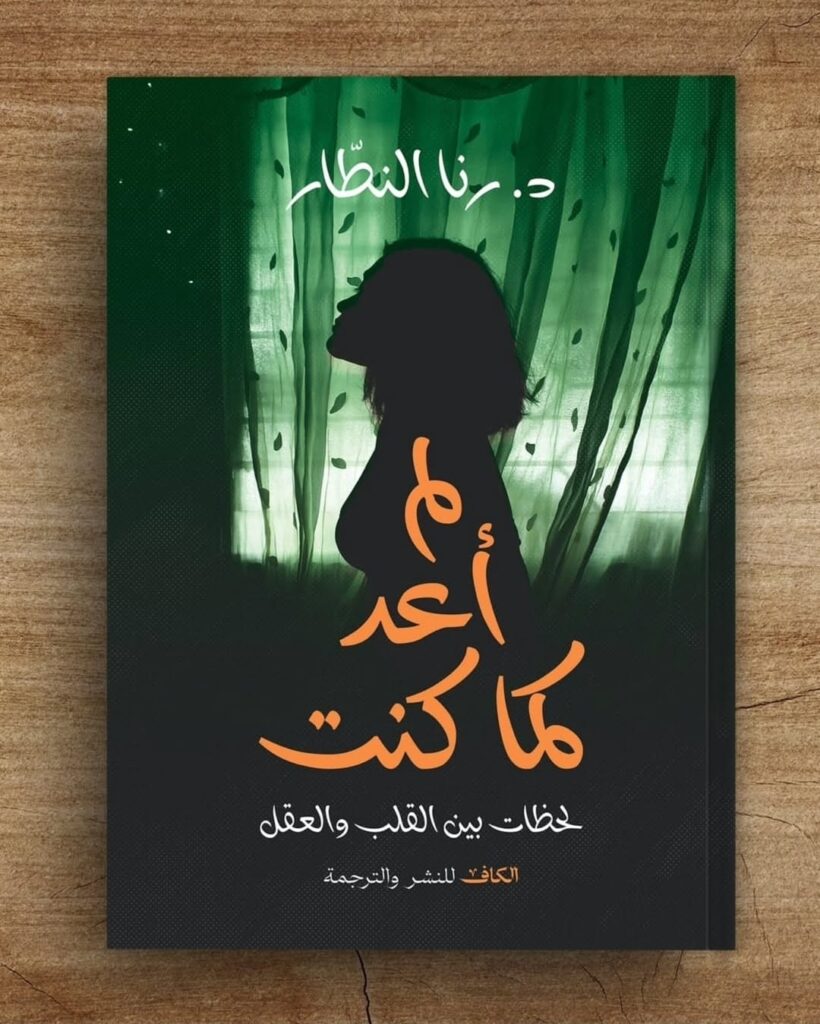
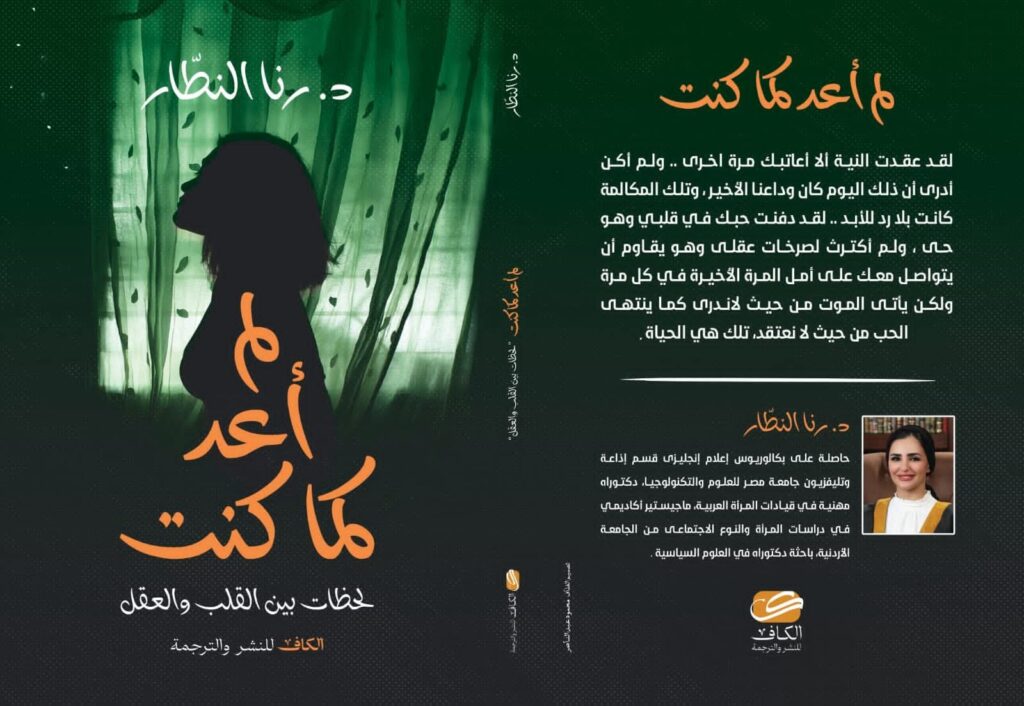
Dr. Rana Al-Nattar is one of those names—she does not rush toward the scene, nor does she enter noisy spaces in search of fleeting applause. Instead, she leaves a deep impact, like silent engravings in memory: steady, clear, and sincere.She is not merely a writer with a profound human sensibility, nor simply an interviewer skilled at managing questions, nor only an academic researcher bound by rigid methodologies.
She is an integrated intellectual case, shaped by years of experience, reflection, and conscious choice. A woman who believes that knowledge is not a luxury, that words are not a game, and that visibility has no value unless it carries genuine meaning.In her journey, the human being cannot be separated from the researcher, nor the mother from the writer, nor personal experience from public awareness.


Each stage of Rana Al-Nattar’s life added a new layer to her consciousness, refined her vision, and expanded her capacity for understanding and analysis—free from ready-made judgments or blind bias. Thus, her writings came different, her interviews sincere, and her ideas close to people without losing their academic depth.
This interview does not present a traditional biography as much as it opens a window onto a mind that thinks calmly, a heart that writes honestly, and a woman who chose to be accountable for her words, their impact, and her image before new generations who read, observe, and learn.
—Who is Rana Al-Nattar, and how was your journey formed between writing, media, and academic study?
I am Rana Al-Nattar, a graduate of English-language Media, Radio and Television Department, Misr University for Science and Technology. However, my real journey did not begin only in lecture halls, but in life itself.
I experienced family life early on and chose, at one stage, to be a present and engaged mother in my daughters’ lives, without abandoning my dream or canceling it—only postponing it until the right time.When I returned to academia, I did so with a different awareness, with the mindset of a woman who had lived real experiences, not a young girl merely seeking self-assertion.

I studied Women’s Studies at the University of Jordan, then moved on to pursue a PhD in Gulf Studies at Qatar University, broadening my perspective to understand the region as a whole—politically, socially, and economically—away from narrow frameworks.
–You combine being a writer, an interviewer, and a PhD researcher. How has this diversity shaped your vision?
This diversity was not a deliberate decision as much as it was a reflection of my nature. I do not believe in rigid separation between disciplines, because the human being is one entity. Writing gave me the ability to express, media taught me how to listen and manage dialogue, and academic study provided me with tools for analysis and depth.
Each field complements the other without negating my personality or forcing it into a rigid mold. That is why I write with spontaneity yet awareness, and conduct interviews calmly, supported by a solid intellectual background that respects the audience’s mind.
–When did you feel that writing was no longer merely a personal passion?
The defining moment came when I realized that my words no longer belonged to me alone. When people began sharing what I wrote, asking for my opinion, and treating my words as a reference or a stance, I felt that the responsibility had grown. What affected me most was noticing that younger generations—friends of my daughters—were reading and discussing what I wrote. At that moment, I understood that a single word could shape an idea or a conviction, and that honesty was no longer an option, but a duty.
—To what extent did your academic studies influence your choices in writing and dialogue?
Academic study increased my awareness, but it never restricted my talent. I believe that writing, at its core, is an innate gift, while knowledge broadens the writer’s horizon and makes them more responsible.


I never wrote simply because I studied a topic academically; I write because I have an opinion, a feeling, and an experience. Academic study helped me see the full picture and avoid superficial judgments, but it never imposed a specific style or language on me.
—In an age of speed and social media, how do you maintain depth in content?
Because I do not write for trends. I write because I have something to say, not because there is an audience waiting for provocation or controversy. Depth cannot be fabricated; it is felt. When writing is sincere, meaning reaches the reader without pretension. I do not chase algorithms or seek instant approval, and I believe that the intelligent reader can sense honesty even amid all the noise.
—What are the main challenges you have faced as an Arab woman in academic research and media?
The greatest challenge was balancing multiple roles: mother, researcher, writer, and a human being with personal needs. Frequent travel, societal perceptions of women’s travel, and psychological pressure were all real challenges. Yet I was convinced that taking a different path was the right path for me. I chose to face these challenges calmly, without confrontation and without presenting myself as a victim.


–From your experience as an interviewer, what makes a dialogue impactful?
A true dialogue begins with listening. When a guest feels that you are not judging them or showcasing your own knowledge, but rather respecting their mind and experience, the conversation becomes honest and influential. The dialogue that leaves an impact is the one that gives space to ideas, not to the loudest voice.
—Was there an experience that marked a real turning point in your career?
The turning point was combining academic study with real-life experience. When I studied women’s political empowerment and then engaged in party politics on the ground, I realized the significant gap between theory and practice. This experience reshaped my thinking, making me more realistic and less driven by slogans.

—How do you view the role of the Arab intellectual today?
Unfortunately, the Arab intellectual is often buried beneath the noise of trends. Their voice exists, but it is not easily seen. Nevertheless, I believe their role has not ended; it simply requires patience and new tools for outreach, without sacrificing depth or honesty.
—What dream do you seek to achieve in the coming stage?
My dream is to complete my doctoral dissertation with genuine achievement, not a formal one, and to return to writing with both strength and calm. I hope my new book, “Women Have Awakened,” will see the light at the right time, and that I will remain honest with myself—because honesty is the only achievement that does not fade with time