



By Maii Abdo| Cairo
From babbles and simple sounds, every child begins learning how to communicate with adults. Once children master their mother tongue and become able to express themselves clearly within their immediate environment, the next step is learning a second language. This new language helps them communicate with more people beyond their familiar surroundings, discover different cultures, and open new horizons for knowledge.
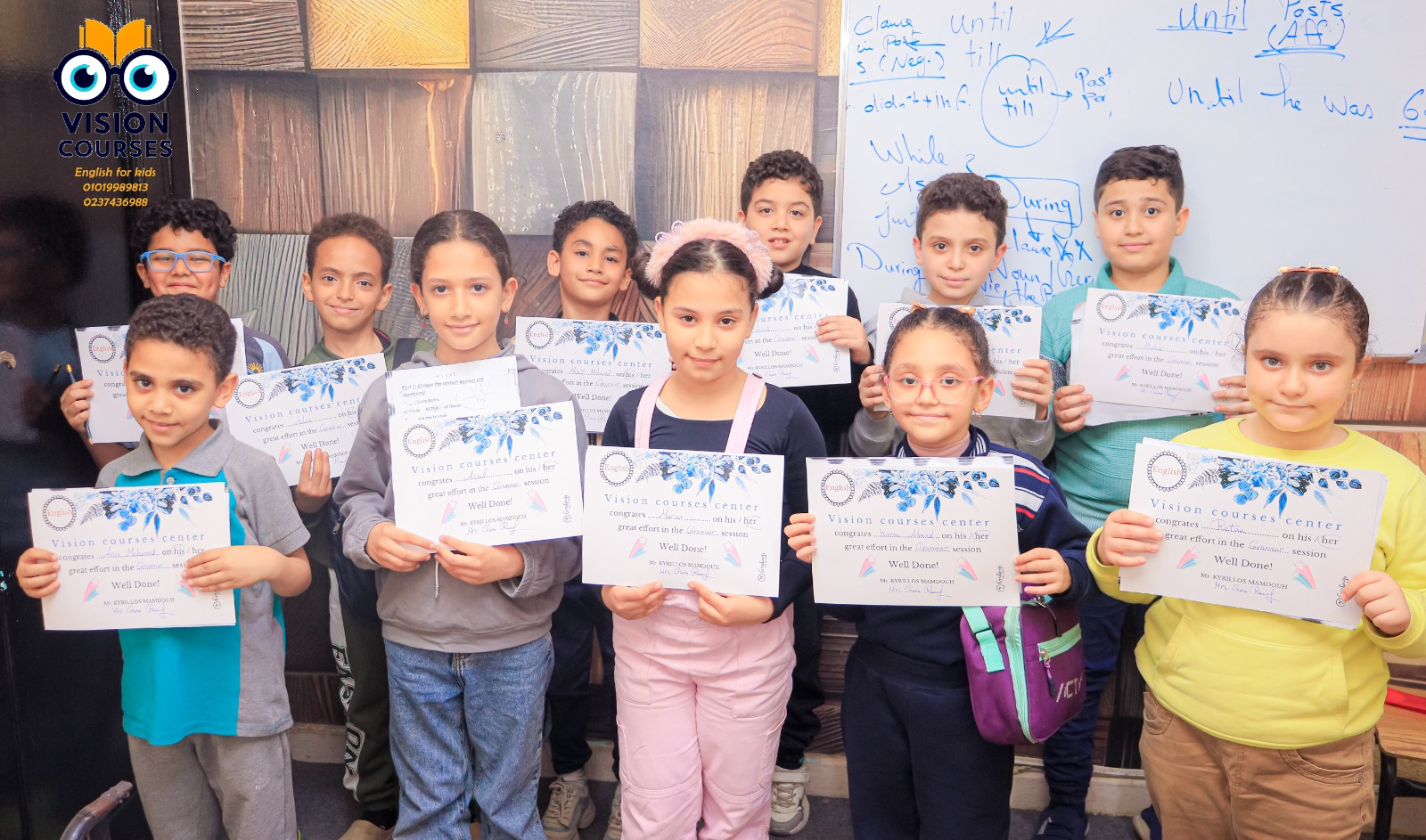
With this in mind, we take a closer look at Vision Courses Academy, which specializes in teaching languages to children.
A Vision That Began in 2019
Vision Courses began its journey in 2019 with a vision that went beyond language instruction itself. The idea was founded by Kiros Mamdouh Semaan, who believed in the importance of preparing children for the future and equipping them with a skill that could expand their career opportunities as they grow older.
However, the goal was not simply to teach a new language. It was also to make a meaningful difference in children’s lives through an educational experience that helps develop their abilities and provides them with tools they may need in the future.
Overcoming the COVID-19 Challenge Through Online Learning
The journey was not without its challenges. In 2020, the COVID-19 pandemic imposed a new reality on educational institutions, making the continuation of classes a challenge that required alternative solutions.
This period was among the most difficult challenges the academy faced. However, it also prompted Vision Courses to transition to online learning and continue delivering lessons remotely.

From Challenge to Continuity
The shift to online learning was more than a response to an exceptional circumstance. It enabled the academy to continue its educational mission amid changing conditions.
This experience demonstrates how challenges can encourage educational institutions to develop their teaching methods and explore new approaches that ensure learning continues and students remain connected to the educational process.
Education and Behavior: Essential Elements of the Learning Process
Educational institutions’ responsibilities extend beyond delivering knowledge, particularly when it comes to children and young people. Character development and positive behavior are important aspects of a learner’s overall growth.
With this in mind, Vision Courses places emphasis on ethical values and behavior alongside language instruction, focusing on values such as respect, discipline, responsibility, and treating others appropriately.
This approach reflects a broader understanding of education—one that goes beyond academic achievement to support children’s personal development and prepare them to interact positively with the world around them.
How Do Children Learn a Language?
Inside the classroom, language instruction relies on simplifying information and encouraging students to participate and practice, while taking individual differences into account.
During our meeting with one of Vision Courses’ teachers, Rogina Robert, we learned about her teaching methods and the importance of reviewing lessons at home, listening to the language, and using it every day. Consistent practice, she explained, is fundamental to developing comprehension and speaking skills.

Student Experience: Yomna’s Journey Since Childhood
To gain a closer understanding of how the educational experience affects students, we met with Yomna, who began her journey with Vision Courses as a child and shared her experience at the academy over the years.
Her story offers an opportunity to explore the learning journey from a student’s perspective and understand how continued participation at the academy has shaped her educational experience and language skills, alongside other aspects of her time there.
Her account highlights the importance of consistency in learning and the role an educational environment can play in shaping students’ memories and experiences—extending beyond lessons and curricula.
More Than Language Learning
Ultimately, Vision Courses stands out for combining language instruction with communication skills development, while emphasizing values and behavior and encouraging children to practice languages both inside and outside the classroom.
Since its establishment in 2019, the academy has sought to develop its teaching methods, including by introducing online learning, giving children opportunities to acquire skills that can support them throughout their education and into the future.

