
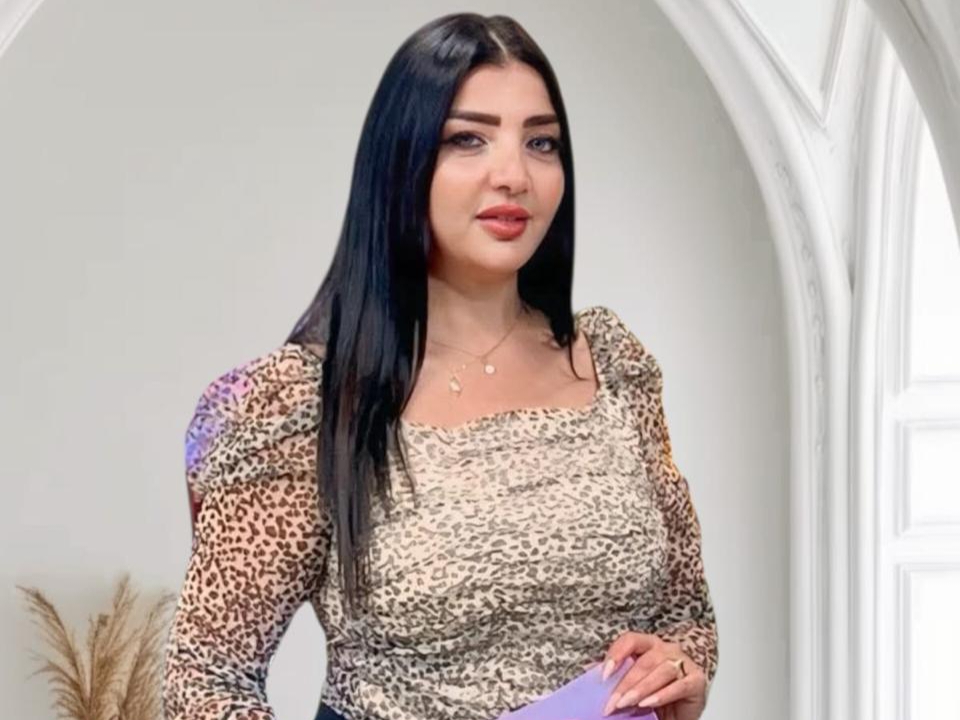
Hala Gbr… The Lady of Society and Media Who Created Her Own Unique Mark Through “Feeha Haga Helwa”

Cairo – Mostafa Al-Masry:
In a time when events move fast and challenges multiply, the media remains a true platform for influence and for spreading hope in people’s hearts.
Among the faces that have proven their strong presence and carved out a special place for themselves shines media personality Hala Gaber, the host of “Feeha Haga Helwa” (There’s Something Good), who did not come to media through traditional paths but turned coincidence into an inspiring success story.Hala is not just another TV presenter; she is a successful social figure, a loving mother, and a businesswoman in the cosmetics industry.
She combines a strong personality with a warm charisma that makes her close to people’s hearts, along with culture and awareness that give her the ability to guide and inspire.Her journey into media was not a childhood dream.

It all started by coincidence when she was chosen to present a major conference after the main presenter had withdrawn, but she amazed everyone with her striking presence. From there, her career was filled with successes. Today, her show “Feeha Haga Helwa” has become a window carrying positive messages, supporting youth, encouraging initiatives, and shedding light on inspiring figures in society.
In an exclusive interview, Hala Gaber spoke to us about her beginnings, the challenges she faced, the secret behind her program’s uniqueness, and the message she aims to deliver through the screen. She also shared with us the most touching moments of her journey, her future ambitions, and her heartfelt message to her audience.
—To begin, who is Hala the person before becoming a well-known media figure?
Away from the media field, I originally come from the cosmetics industry, specifically hair care. We used to own several factories, but after the COVID-19 crisis we continued with just one. My husband and I still work in this field and we have our own brand. Beyond that, I am a social lady and, above all, a mother.
—How did your journey in media begin? Was it a childhood dream or pure coincidence?
My entry into the media world was purely by coincidence. During one event, I met the Chairman of Dubai Today Media Group. Through our conversation, I began working with them as an editor, writing articles and reflections, until I became the group’s Regional Director.
My writings gained wide resonance and my name rose in search engines.Although my childhood dream was to become a flight attendant, I was not destined for it. I got married, immersed myself in family life, and thought that dream was gone. But destiny led me to media. Later, I worked with Al-Arab Today and Al-Watan Al-Arabi newspapers until I became Deputy Chairman.
As for my start as a presenter, that too was coincidence. A presenter withdrew from a conference just a day before, and I was chosen instead. By God’s grace, my appearance was praised by audiences of all nationalities. From there I began presenting conferences and hosted seasons of the Oscar Egypt Festival. Then came the big opportunity: my very own program.
—What were the main challenges you faced at the start of your media career?
Of course, I faced challenges. The main one was that some people criticized me for not having a degree in media. But I believe media is about talent, charisma, and culture—not just a certificate. Media is an art before it is an academic specialization.
—How was the idea of “Feeha Haga Helwa” born?
The idea came from my belief in the importance of spreading national awareness and supporting youth. I wanted the program to be a genuine message that helps young people take their first steps toward success, opening new horizons for them, while also highlighting positive models in society.
—What is the main goal you seek to achieve through the program?
My first goal is to provide job opportunities for youth and encourage them to start their own businesses, in addition to presenting various topics useful for everyone—including housewives. I aspire for the program to be a platform for hope and a space to support Egypt in all its aspects.
—From your perspective, what distinguishes the program from other social shows?
I believe the distinction lies in the unconventional topics I address, especially those related to industry and commerce. These are crucial areas for our society but rarely receive enough attention.

—Who is your role model in media?
The esteemed media figure Sana Mansour, because of the respect she shows her guests and the space she gives them to express themselves.
—Have you faced difficulties convincing people that there is always a bright side despite daily pressures?
Yes, since some people believe pressures overshadow everything. But I am convinced that life always has bright sides—we just need to search for them.
—Is there a particular episode or story that touched you personally and remains unforgettable?
Yes. One of the most touching episodes was when I hosted women and young ladies from Upper Egypt—specifically Minya.
They defied traditions and built a strong handbag brand with international shipping options. They were a shining example of Egyptian women, and I always feel proud when I remember them.
—What groups or issues are you most keen on highlighting through the program?
My program does not focus on a single group; it addresses issues across all segments of society. The important thing is that the approach remains positive and purposeful.
—How do you handle criticism or negative comments about the program?
Thankfully, I have not received major negative feedback so far. Of course, there are occasional comments driven by prejudice or related to appearance. I pay no attention to them, as I always put my audience first.
—What makes you truly feel that your message is reaching people?
When I see the impact the program has on young people and follow up on their successes after appearing on the show, I feel my message has truly been delivered.
—In your daily life, how do you maintain positivity?
I firmly believe in a phrase I always repeat and write in my reflections: “Positivity is a way of life.”
—Who supports you most in life and gives you strength to continue?
My family is my first and closest source of support.
—What are your upcoming ambitions? Could we see you in a different type of program in the future?
My ambition is to further develop my show and reach a wider audience. As for other types of programs, I wouldn’t mind presenting something different if it also carries a meaningful message.


