


Mohamed El-Sayed: A Difficult Equation Successfully Achieved at Wast El Balad — Affordable Prices with High Quality

Cairo – Maii Abdo:
At a time when restaurants increasingly resemble one another, Wast El Balad emerges from the heart of Shubra El-Kheima not merely as a dining destination, but as a story—one rooted in struggle, perseverance, and authenticity.
Behind the restaurant stands Mohamed El-Sayed, a man who did not encounter success by chance, but rather shaped it through harsh trials, fluctuating experiences, and years marked by exhaustion, setbacks, and repeated comebacks.
He did not simply open a restaurant; he redefined the concept of “home-style food” by transforming it into a project that reflects his own character—resilient, sincere, and firmly convinced that quality food is a right for everyone, not a privilege for a select few.
El-Sayed’s sense of responsibility began early. Upon completing secondary school, he did not wait for opportunities to present themselves; instead, he actively pursued them.
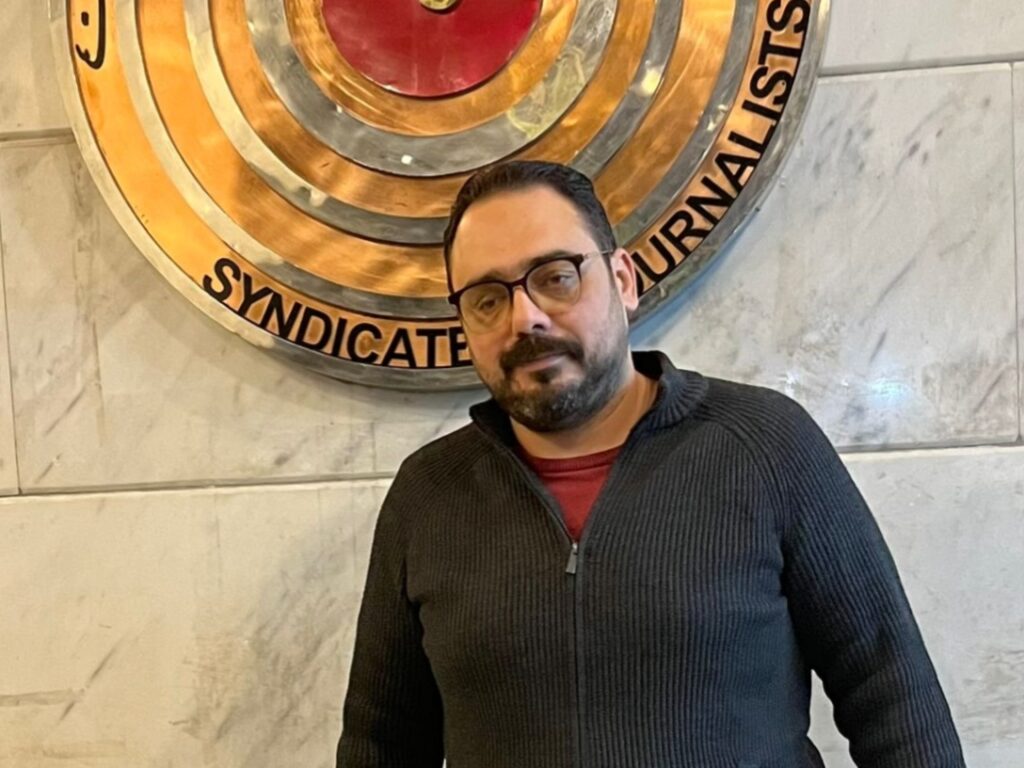
He started working in a cafeteria and a restaurant, and when the owner decided to shut it down due to low turnout, Mohamed surprised him with a bold proposal to rent the place and manage it himself.
Although the experience was brief, it revealed a personality unafraid of risk, despite his father’s understandable concerns about his young age.Following his father’s advice, Mohamed shifted course and began working as an accountant at a company, entering a new professional chapter characterized by discipline and efficiency. His competence soon led to assignments in Sharm El-Sheikh, Dahab, and Nuweiba while he was still a third-year student at the Faculty of Commerce, Ain Shams University.
Moving between locations helped refine his character and expand his professional network, particularly when he later worked as a purchasing representative—a phase he describes as crucial in learning how to read the market and understand people.Life, however, had prepared a far more severe test. During his military service, Mohamed suffered a serious health crisis that included multiple surgeries and a brain tumor, followed by more than a year of intense physical and psychological suffering.
He recalls being told by doctors that they could not fully explain his condition or recovery. Once athletic and energetic, he suddenly found himself physically frail and emotionally broken, confronting the harsh reality that life can change without warning.After recovering, stopping was not an option. He needed to work to continue his treatment, which led him through diverse professional experiences.


He began working in a fashion atelier, eventually becoming its manager, then managing another store, though he always felt he was not in his true place. Later, he joined a telecommunications company during its early entry into the Egyptian market, starting as a sales representative and rising to regional manager, relying on his communication skills and wide network of relationships.
Entrepreneurship soon followed, with the opening of two mobile phone shops in Shubra and Shorabiya. Yet the 2011 revolution dealt him a devastating blow: both shops were vandalized twice, resulting in the loss of capital and mounting debts. Still, he refused to surrender. He joined PepsiCo (Chipsy) as an HR contractor, advanced to supervisor, and later managed the Obour branch.
He then established his own outsourcing company, which unfortunately ceased operations during the COVID-19 pandemic.Amid these upheavals, an old dream resurfaced—opening a restaurant, but one that would be genuinely different.
He chose the name Wast El Balad out of his deep affection for the area and what it symbolizes of authentic Egyptian spirit. Seeking distinction, he even experimented with ostrich meat, challenging market expectations and opening in a non-vibrant location in Shubra, despite warnings from industry experts. One restaurant manager from a well-known chain bluntly told him that the branch would fail. Mohamed, however, remained confident, believing firmly in his vision.




A pivotal moment came with a visit from TV host and food critic Morad Makram, who filmed an episode of his program “El-Akeel” inside the restaurant. What began as coincidence turned into a powerful boost, introducing the public to a dining experience based on quality rather than pretense.For Mohamed El-Sayed, food is not merely a product; it is a social message.
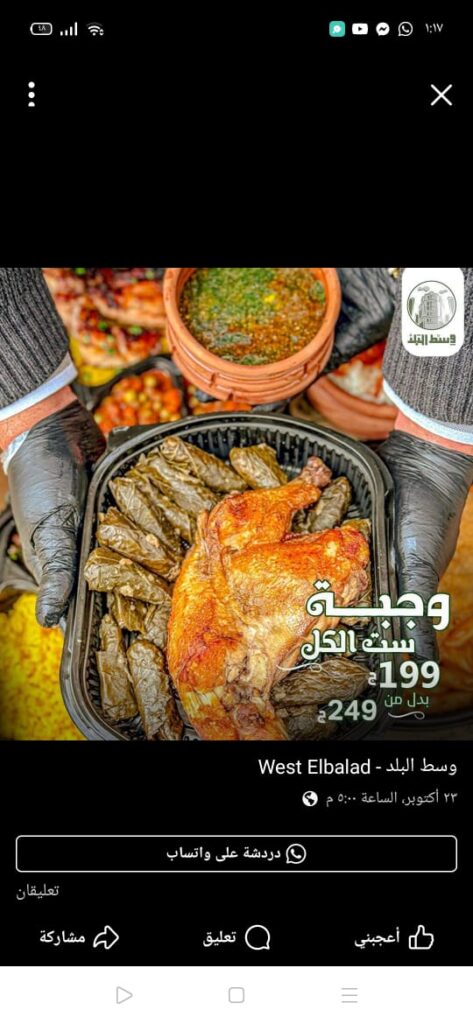
This philosophy materialized in the creation of affordable meal options, most notably the “El-Sha’yan Meal,” consisting of rice with vermicelli, vegetables, and a quarter chicken at a modest price, aimed at ensuring that all social classes can enjoy clean, respectful, home-quality food.
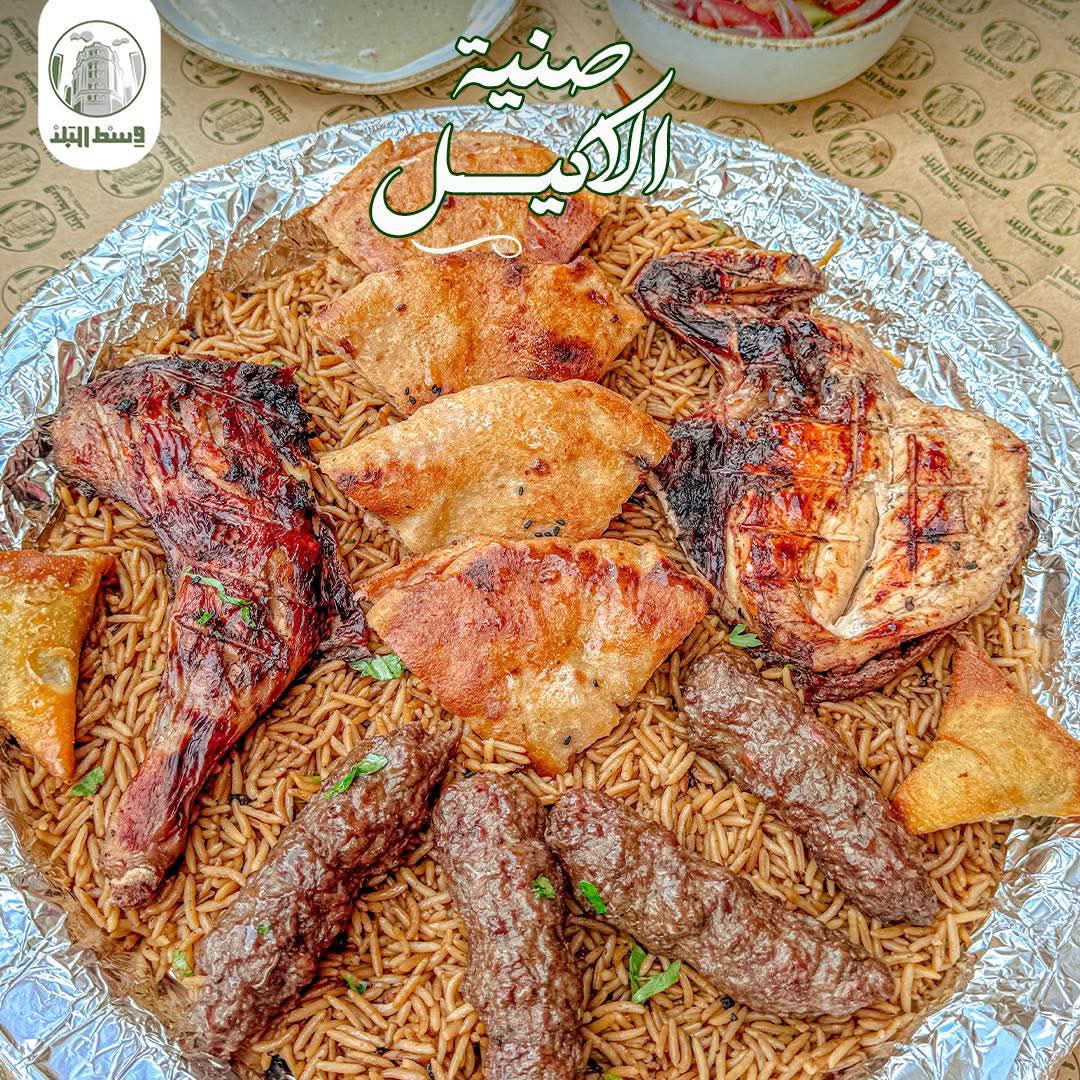
Over time, Wast El Balad built a loyal customer base through signature dishes that became synonymous with the restaurant, including the highly popular “El-Omda Meal” with its authentic baladi ghee flavor, the “Capsule” pasta with its distinctive red sauce, and a homemade-style béchamel dish made with mozzarella cheese, alongside a wide range of traditional Egyptian favorites such as fatta, molokhia, liver, sausage, kofta, shish tawook, crispy chicken, and more.
His marketing philosophy rests on a challenging equation: affordable pricing, high quality, and fair profit margins—without compromising cleanliness or taste.
Looking ahead, Mohamed dreams of expanding Wast El Balad across different areas, establishing branches that serve all segments of society, supported by a wide-reaching delivery network, while remaining faithful to his core promise: that every customer feels as though they are ordering food from home.
Reflecting on his journey, Mohamed El-Sayed offers a heartfelt piece of advice drawn from lived experience: continuous self-development is essential, stagnation is dangerous, and everything ultimately lies in God’s hands. One may rise or fall at any stage, but patience and perseverance are what make the difference.
Mohamed El-Sayed is not merely a restaurant owner; he is a living example of someone who understood that failure is a phase, pain can be a beginning, and true success lies in creating something that reflects who you are—and resonates with people. His story affirms that success is not measured by speed, but by the ability to endure.
In every meal served at Wast El Balad, there is the imprint of a lifetime of experience, a deep respect for hard work, and genuine appreciation for customers seeking the comforting taste of home above all else.


The restaurant is not the final stop in a long journey, but a new beginning for a man who believes that sustenance comes from God, and that falling does not end a dream—it reshapes it.
As he continues to pursue expansion and growth, Wast El Balad stands as proof that sincerity, when combined with patience and dedication, can create a success with a distinctive flavor—one that truly tastes like home.

