
Exclusive Interview | Ashraf Mohamed El-Refaai: The Custodian of Egypt’s Authentic Kebab Craft
Cairo – Mostafa El Masry:
In the heart of Sayyida Zeinab—where history blends with spiritual depth and the sincerity of its people—the name El-Refaai stands as a singular landmark. It requires neither bold signage nor promotional noise; it lives on through reputation alone.
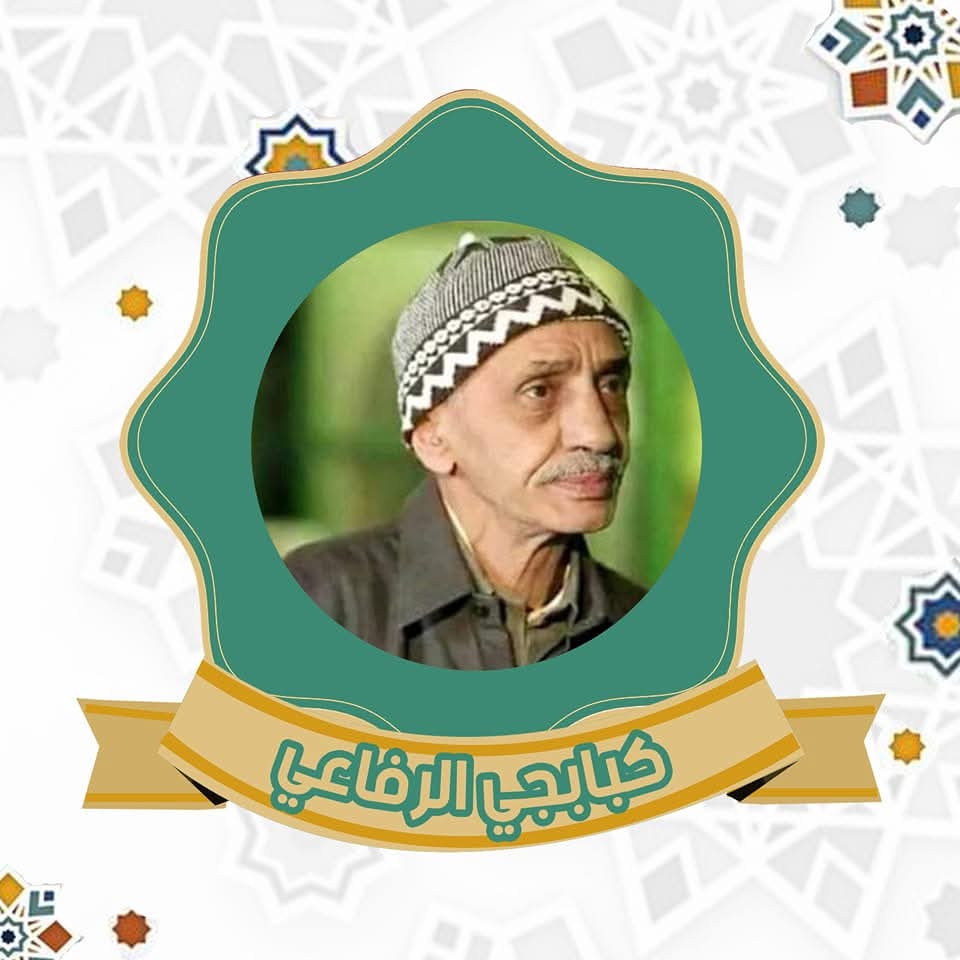
Spoken long before it is written, the name has been carried by collective memory from one generation to the next, symbolizing integrity and trust even before it signifies fine food.Ashraf Mohamed El-Refaai is not merely a kebab shop owner.

He is the inheritor of a deeply rooted craft and a legacy spanning nearly seventy years—shaped by a father who instilled in his children that true livelihood is earned through honesty, and that blessing resides only where work is founded on righteousness.
Here, success is not measured by expansion or the number of branches, but by the purity of the product, respect for the customer, and accountability before God in every detail, no matter how small.
In this interview, Ashraf El-Refaai does not speak as a businessman, but as a man whose character was formed between the heat of the grill and the lessons of life.
He carries his father’s guidance in his heart, firmly believing that continuity is a blessing, that a respected name is a trust, and that a true “kebab master” is one who honors and preserves the profession rather than merely practices it.
How did the story begin, and how was the original name established in the world of kebab?
The story began with my late father, may God have mercy on him, nearly seventy years ago.
The place was first known as “Kebabgi Al-Tahera,” before later becoming associated with the El-Refaai name and evolving into a well-known destination in Sayyida Zeinab and beyond.
My father started with a small cart, a simple craftsman who worked tirelessly and whom God blessed.


One shop followed another, yet he never allowed success to lead to arrogance.
He always believed that piety was the foundation of everything, and that fearing God in one’s work is the true secret of sustainability. This remains the most valuable lesson I learned from him.
What distinguishes El-Refaai kebab from others?
We do not use black pepper in our seasoning. All our work relies on lamb, which gives a distinctly authentic flavor. Even if the meat quality is modest, proper preparation elevates it.
Our seasoning is limited to salt, onions, and tomatoes only. Excessive spices are often used to conceal flaws, whereas truly good food does not need anything to hide behind.
When did you assume full responsibility after your father’s passing, especially as a father of four daughters?
My father passed away approximately nine years ago.
Having four daughters placed a great responsibility on my shoulders—to protect their rights and to safeguard the name, exactly as my father entrusted me.I worked alongside him in the shop even during my university years.
I hold a bachelor’s degree in Tourism and Hotels, and that academic background has significantly influenced my approach to management, strategic thinking, and developing the business while preserving its authentic spirit.
What is the secret behind proper meat cutting in this craft?
Every dish has its specific cut. Kebab differs from kofta and sausage, and precision is essential. I personally supervise the mincing process.


Authentic kebab and kofta must come only from the rib-eye and kidney fat.
We take the cut from the lamb’s rib cage, starting from the neck down to a specific point. It is the most expensive cut, but it is also the only correct one.
-What has been your proudest moment?
My proudest moment was being able to stand firmly on my feet after my father’s death.
Seeing the place continue and regain its strength was a moment of deep pride.
When I recited Al-Fatiha for his soul, I felt at peace knowing that I had honored and protected the trust he placed in my hands.
Why do you avoid large-scale expansion and opening multiple branches?
Our livelihood is deeply tied to this location. The name itself is a responsibility.
Despite numerous attempts to imitate the El-Refaai name—even beyond Egypt—the original remains unmistakable.
This craft, when practiced elsewhere, yields different results. Not everything can be replicated or mass-produced without losing its essence.
—How do you manage the team and preserve consistency in craftsmanship?
We operate as one family.Most of our staff have been with us for many years, and some worked alongside my father and witnessed his principles firsthand.Experience here is not measured merely in years, but in accumulated skill, discipline, and mutual respect. Authority is earned through trust, not through job titles.
-The role of “Uncle Ibrahim” appears central to this structure.

How would you describe it?
Uncle Ibrahim is one of the most veteran kebab craftsmen in Egypt and the brother-in-law of the late Haj Mohamed El-Refaai. He witnessed the very beginnings of the profession and all its stages of development.
His word carries weight with everyone—including myself. He represents discipline, integrity, and mastery. His experience and craftsmanship form the backbone upon which new generations in Sayyida Zeinab learn the true foundations of the trade.
With more than fifty years of experience, Uncle Ibrahim believes that success in this profession lies not only in meat quality or speed of preparation, but in careful attention to every detail from start to finish.
He explains: “I oversee every step—from cutting the meat until it reaches the grill—to ensure everything is done correctly. Any new worker, I personally train from the beginning and leave nothing to chance. Craftsmanship comes before speed. Those who learn the right way endure; those who make mistakes, I correct and guide.”
On task distribution, he adds: “I know each worker’s role and assign responsibilities according to experience. Seniors guide, and juniors learn. Anyone who underestimates the work is addressed immediately.


We work as a family, not merely as employees. When everyone knows their role, service becomes smooth and customers do not wait.”Uncle Ibrahim emphasizes that these principles are not rules, but a way of life:> “Respect for customers comes first, and honesty in work always.
Even simple meat becomes exceptional when handled correctly. Proper work does not require tricks or excessive seasoning—everything is transparent, and the customer feels the difference.”
He concludes by noting that preserving the craft and its heritage is challenging, yet deeply rewarding:> “I find true happiness in satisfied customers and in teaching newcomers who respect the profession. This is all blessing, and it is a form of generosity granted by God.”
In conclusion
Ashraf El-Refaai and Uncle Ibrahim agree:“Craftsmanship is provision, and provision does not come through shortcuts. As long as the food is honest, divine blessing will continue.”

