




Cairo – Maii Abdo:
This is how Mervat El-Meligi’s journey takes shape: early passion, deep responsibility, and a voice that consistently chooses to stand with the people.”
Mervat El-Meligi was never one of those who chase the spotlight; she is one of the faces carved by genuine effort and the unseen labor behind the camera.
When I met her at the Journalists’ Syndicate, I did not encounter the firm Extra News anchor viewers know on air, but rather a candid woman recalling the story of a little girl who once dreamed of a camera she did not know how to reach—until she carved her own path through a career that began at Maspero and led her to one of Egypt’s most prominent television screens.
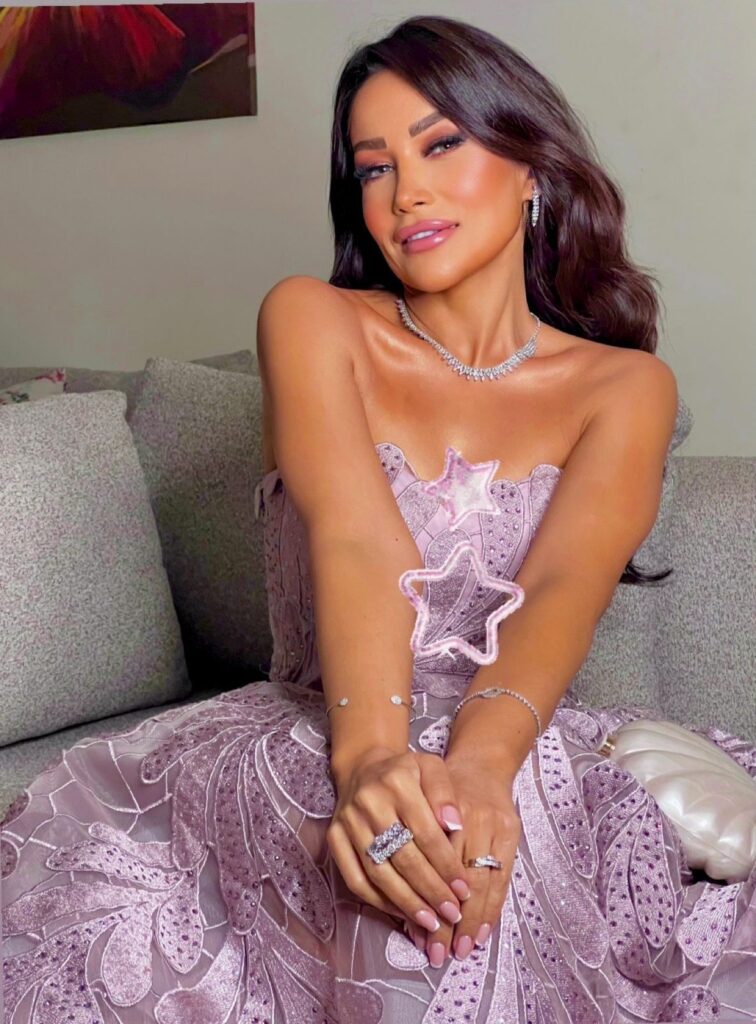
Mervat speaks of her childhood as if it were the earliest frame of the person she is today.
She was lively, sharp, and impossible to overlook—traits that made her family suggest she would make a good lawyer. But her heart was drawn to the microphone, the screen, and the idea of being “a voice.”
She had no clear path into the field. After graduating from the Faculty of Al-Alsun at Ain Shams University—English and German departments—she began her career as a translator at the Ministry of Defense from 2002 to 2005, including political and military translation.
She excelled, but a quiet certainty inside her whispered: translation was a station, not a destination.The moment that altered her path came unexpectedly, the kind of moment that shifts the course of an entire life.
She met former Minister of Information Anas El-Feki, who looked at her CV and laughed: “This is a political-translation résumé,” he said, before recommending that she join television as a news presenter.
And so, at Nile News, the journey she never anticipated began. She did not enter as an anchor; she started as an editor and translator, then field reporter, then news presenter—step by step, under the roof of Maspero, which she calls a true “school.”
“Maspero teaches you self-reliance,” she says. “You face difficult situations that you must resolve on the spot… Real confidence on air comes from those experiences.”
For Mervat, appearance was never enough; knowledge was the foundation. She does not chase trends or depend on social media, insisting that any presenter who does not know the source of their information cannot ask a single meaningful question.
To her, confidence on air is not a tone of voice—it is understanding. She therefore built her craft from the ground up: information, verification, structure, questioning, and presence. It is this rigor that later positioned her among Egypt’s leading interview hosts, not merely a newsreader.
During her years at Maspero, she was consistently on the frontlines of major events. She covered nearly all Arab summits hosted in Egypt and followed, moment by moment, the events of the revolution and the closure of Tahrir Complex.
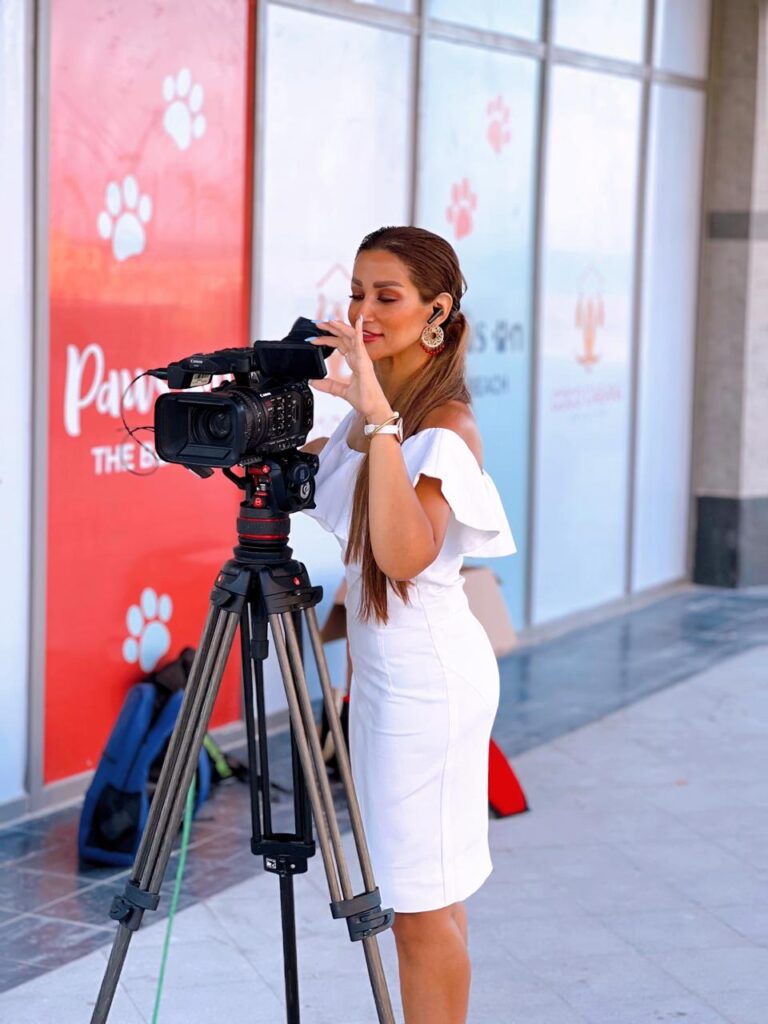
Yet one image remains etched in her memory: the “Trial of the Century” of former President Hosni Mubarak. “That day never leaves my mind,” she says, her voice instinctively softening with the recollection.
Later, she moved into economic journalism and unexpectedly fell in love with it—discovering that economics demands a calm mind and an ability to simplify complex ideas. She excelled, especially through one of her strongest programs, “Hamzet Wasl,” where she felt closest to public sentiment via social media and in direct contact with viewers.
She went on to present several programs on Nile News—“Nile Index” (an economic program), “A New Morning,” and “Arts”—before being selected for the launch team of Channel One HD, appearing on its prime newscasts at 3 p.m., 6 p.m., and 9 p.m.
There she gained a different kind of experience—one of visual professionalism, speed, and commanding presence.Then came the leap she describes as her “entry into true professionalism”: Extra News.
A screen with a faster rhythm, higher competition, and standards that demand every presenter’s best version.
“Extra News is a bright place,” she says. “Everyone there is talented… so you must work on yourself every single day and prove your presence amid strong competition.”
She used social media wisely—not for showmanship, but as a professional tool that strengthened her connection to viewers, while never treating it as a source of information.
She always repeats: “You can’t take your sources from social media.”Today, Mervat is closely associated with her signature program, “Parliament Street.”
She loves this genre of journalism because it sits at the intersection of information, politics, and public interest. Guests arrive representing their parties and defending their positions—while she arrives carrying the responsibility of representing the viewer.
With unwavering clarity, she says: “I belong to Egypt… not to any party.”The sentence perfectly captures her professional identity: firm loyalty to the citizen’s right to understand.Beyond the screen, her life extends into a softer, warmer space. She credits her mother as her primary source of support—“the first person whose opinion I wait for after any broadcast.”
And in her free time, she devotes herself to an entirely different passion: fashion design. She designs and sews her own dresses with noticeable skill and creativity.She has recently attended major events such as the Grand Ball at Abdeen Palace and the Opera Gala at the New Administrative Capital—moments she sees as reflections of the “new Egypt” she is keen to help present to the world.
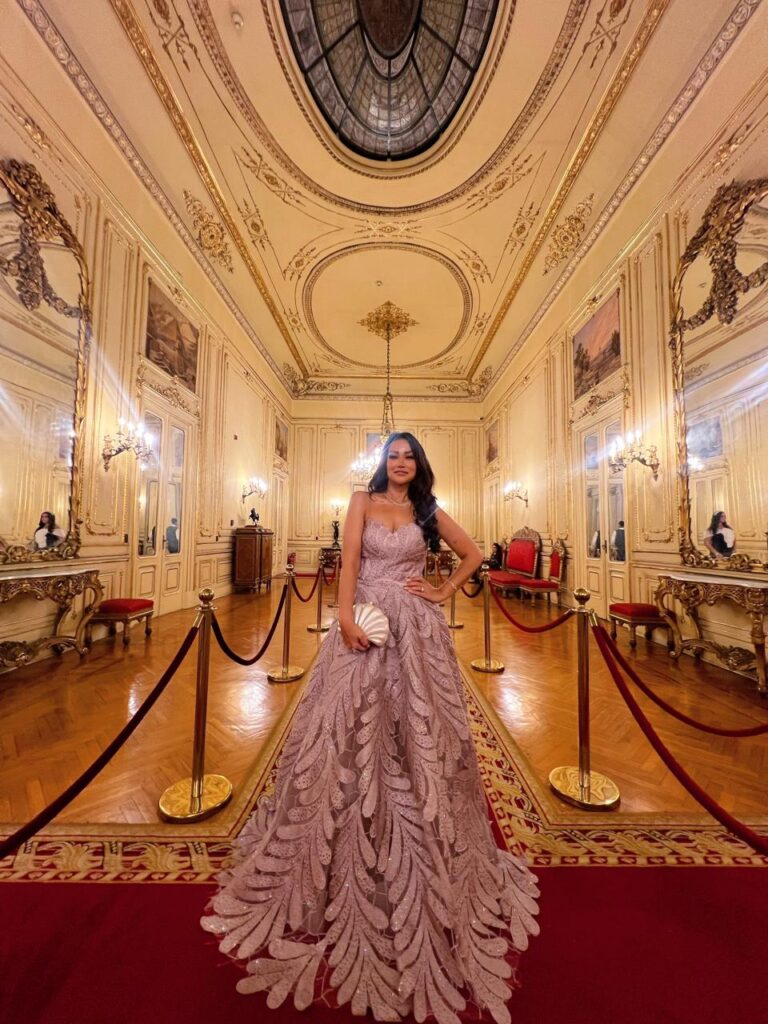
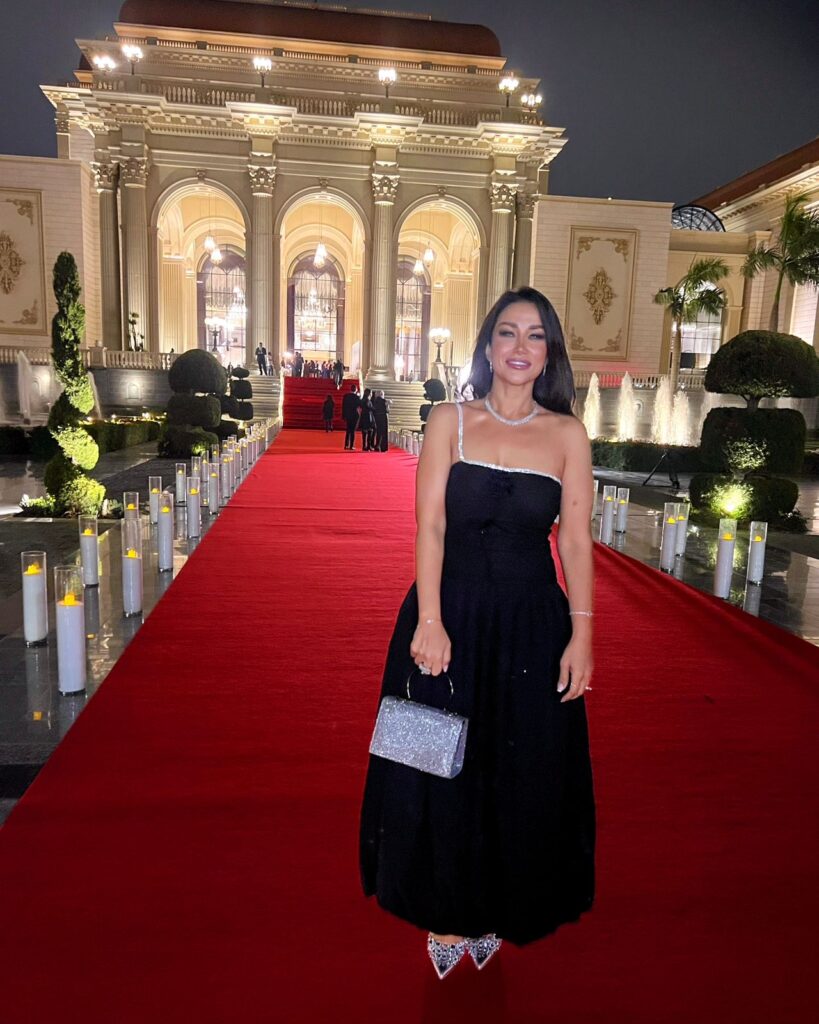
She also launched a clever social-media initiative during the opening of the Grand Egyptian Museum: if fifty million Egyptian users changed their profile photos to images in ancient Egyptian costumes, it would create the largest tourism-promotion campaign at zero cost. A practical, people-driven idea—very much like her.
Throughout her journey, Mervat has never lingered on success or lamented the lack of personal connections that might have sped up her rise. She admits that the absence of “wasta” slowed her progress, but never stopped it. “God, and only God, brought me here,” she says. “I have no regrets about anything I sacrificed for my work.”
When asked about her purpose, she sums it up in a single sentence that carries the essence of her entire story:“I want to be the voice of the street.”By the end of the conversation, one realizes that Mervat El-Meligi is not merely a presenter reading headlines.
She is a human project—proof that when passion merges with perseverance, it carves its own path, no matter the obstacles. Behind her calm demeanor stands a woman who fully understands the weight of her craft, knowing that journalism is not a platform for appearance but a responsibility built on truth and on listening before speaking.Though still relatively early in her career, she exudes a depth of human experience shaped by real encounters with the street and by difficult situations behind the scenes long before the camera light turns red.
When she speaks of her dream, her eyes do not search for fame but reflect a belief in the media’s ability to make an impact—no matter how small, even if unnoticed by many.This is Mervat’s secret: realistic enough to recognize the distance ahead, yet confident enough to walk it. A rare balance of ambition and humility, professional strength and personal gentleness.
When she stands to leave, she leaves behind the unmistakable sense that she has much more to give, and that the path she seeks is not simply another career step—but a step toward fully becoming what she always says she strives to be:“the voice of the street, the voice of the people… a voice that does not rise above others, but never fades.”

