


Exclusive Interview | Between the Blaze of Fire and the Grace of Spirit: “Abu Hamza”… An Empire of Contentment in the Heart of Working-Class Neighborhoods
Cairo – Mostafa Al-Masry:
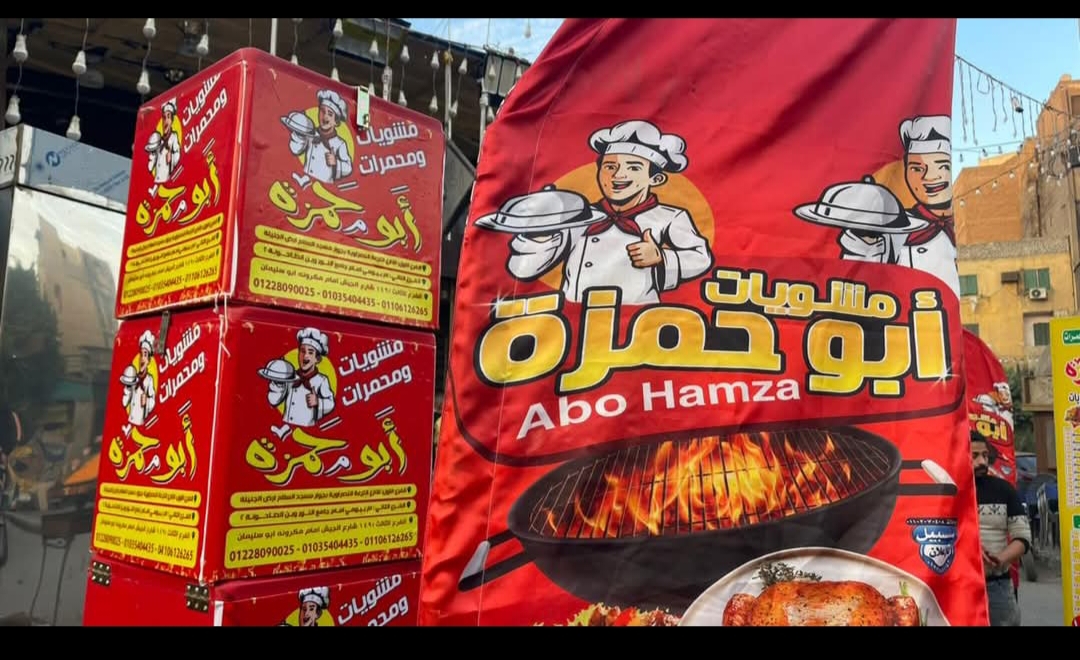
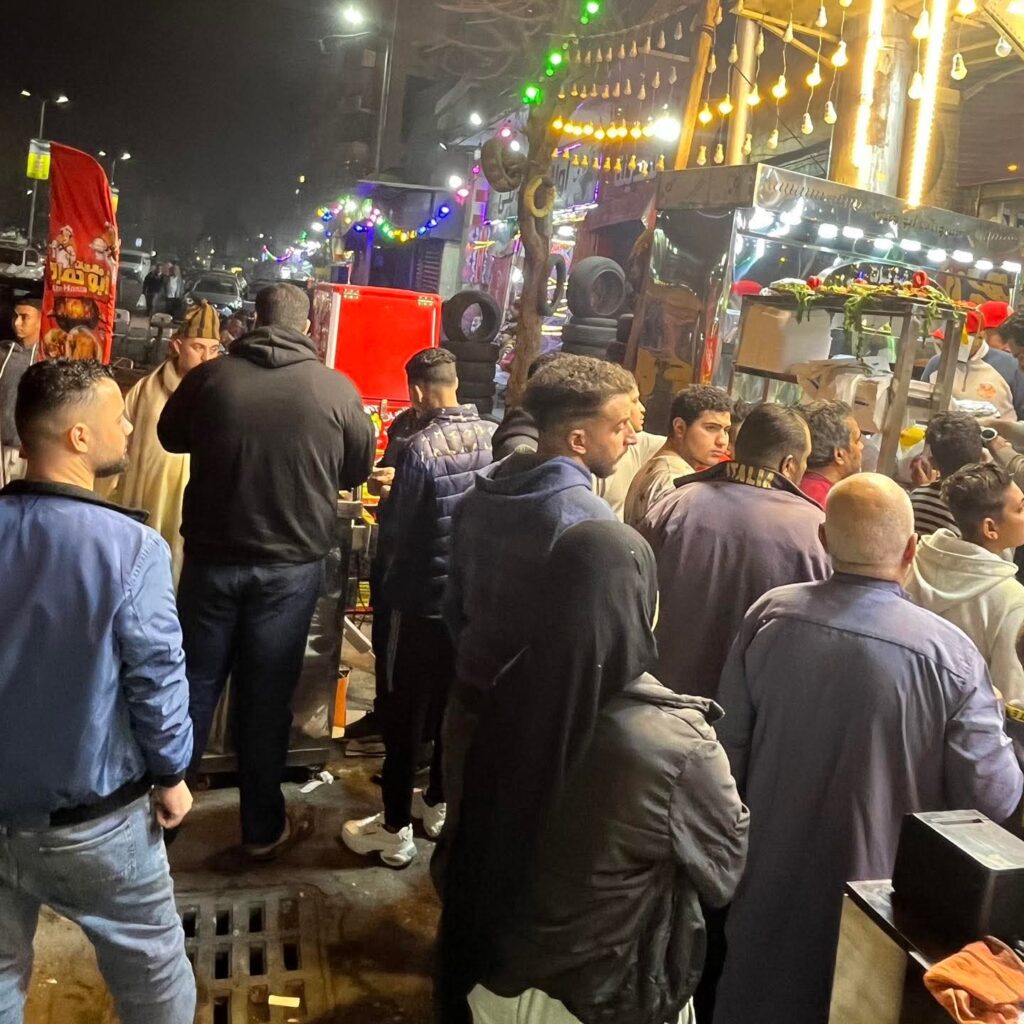
In a lively alley of Shubra El-Kheima, and within the authentic quarters of Bab El-Shaaria, the smoke rising from “Abu Hamza” is not merely the smoke of grilling meat—it tells a deeper story. It chronicles a human saga built on blessing and sheltered by dignity.
Here, over glowing charcoal, stand men who believe that feeding the hungry with respect is the truest form of profit, and that a humble loaf offered to those in need can open doors in heaven that millions cannot.
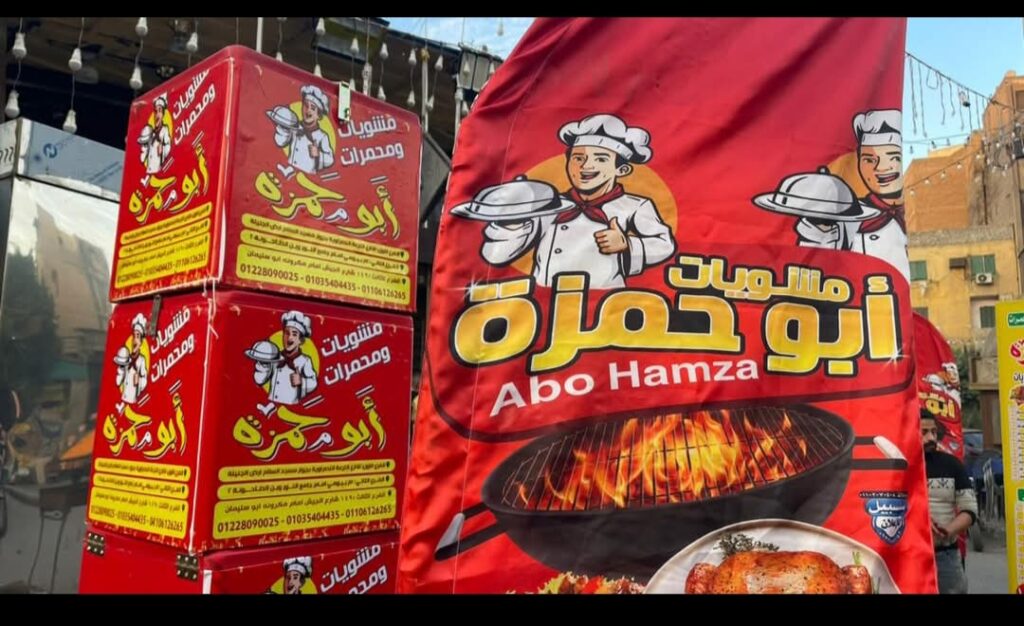
Founded by Amr Saeed and driven forward with a tireless heart alongside his loyal partners—Mohamed Abdel-Sattar, Ahmed Adel, and Ibrahim Adel—this entity is far more than a restaurant chain.
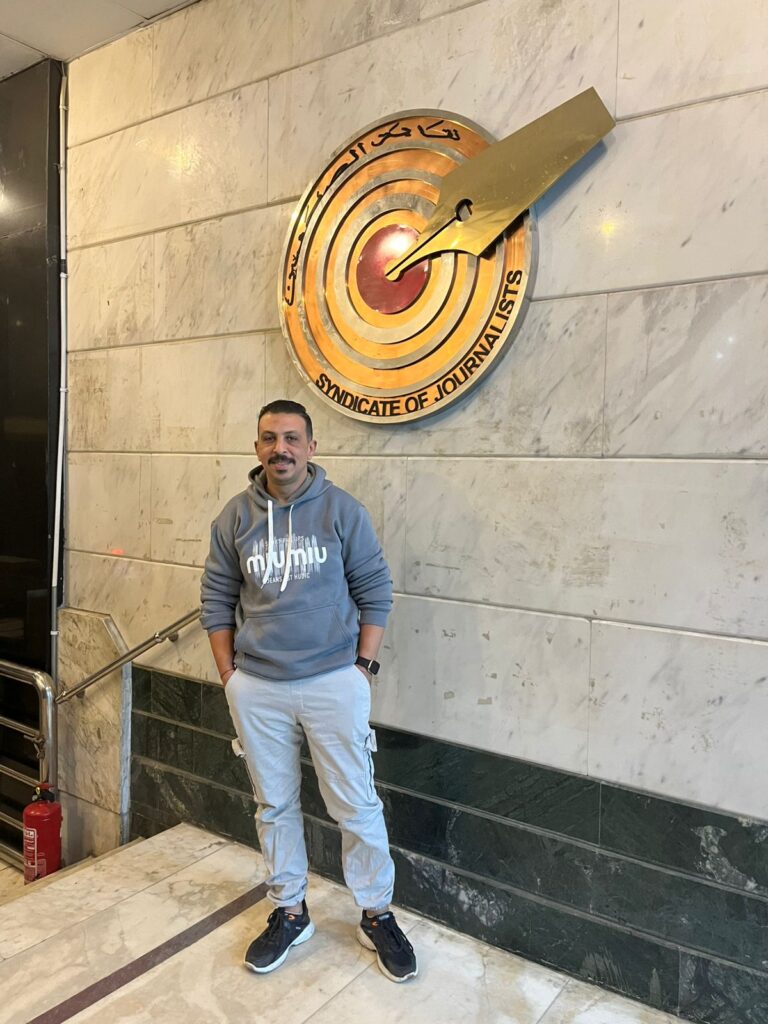
It is a school of management through love and profit through compassion. In this extended narrative interview, we journey with Mohamed Abdel-Sattar, one of the pillars of the establishment, to uncover the backstage hardships and the craft of creating happiness through a meal that may cost no more than a box of matches, yet carries the weight of mountains in humanity.
–Let us begin with the collective spirit behind “Abu Hamza.” You speak of your partners as though you are a solid structure. How have you maintained this unity despite intense work pressures and multiple branches?
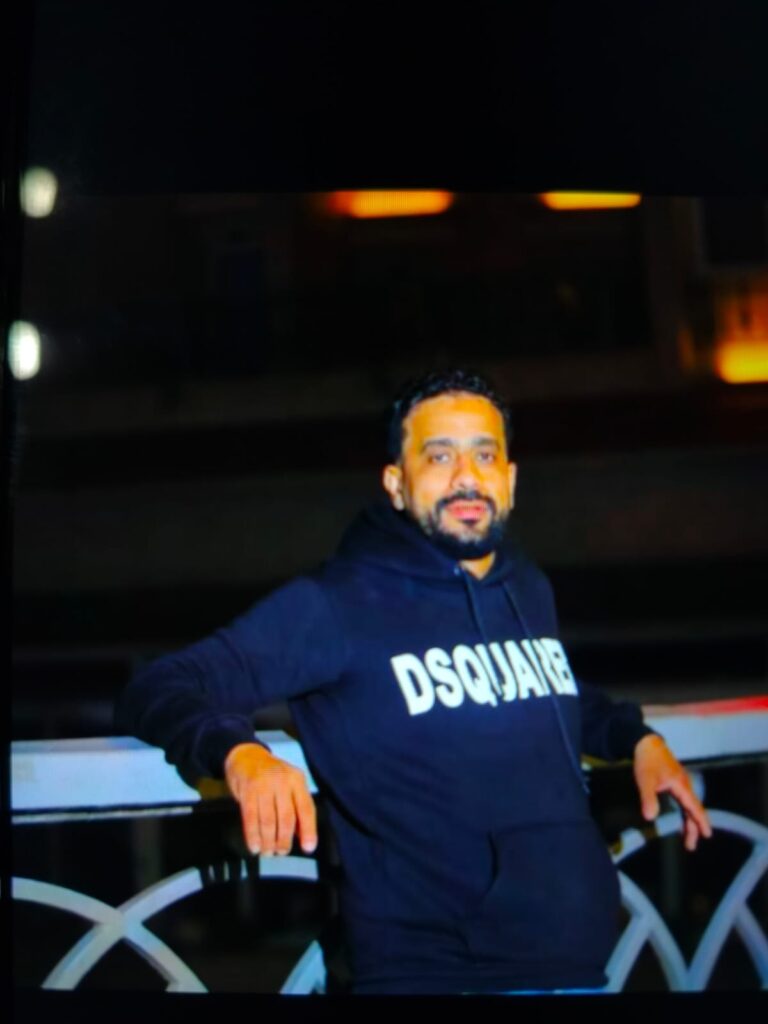
The secret lies in sincerity of intention. We are not merely business partners—we are a family. Amr is the driving force, a man who knows no rest; his life is constant motion and hard work. We divide responsibilities wisely: one monitors the market, another oversees quality, another ensures customer service excellence.What unites us is that we all come from the same neighborhood. We understand the value of every pound in a craftsman’s hand, and we know the bitterness of hardship.
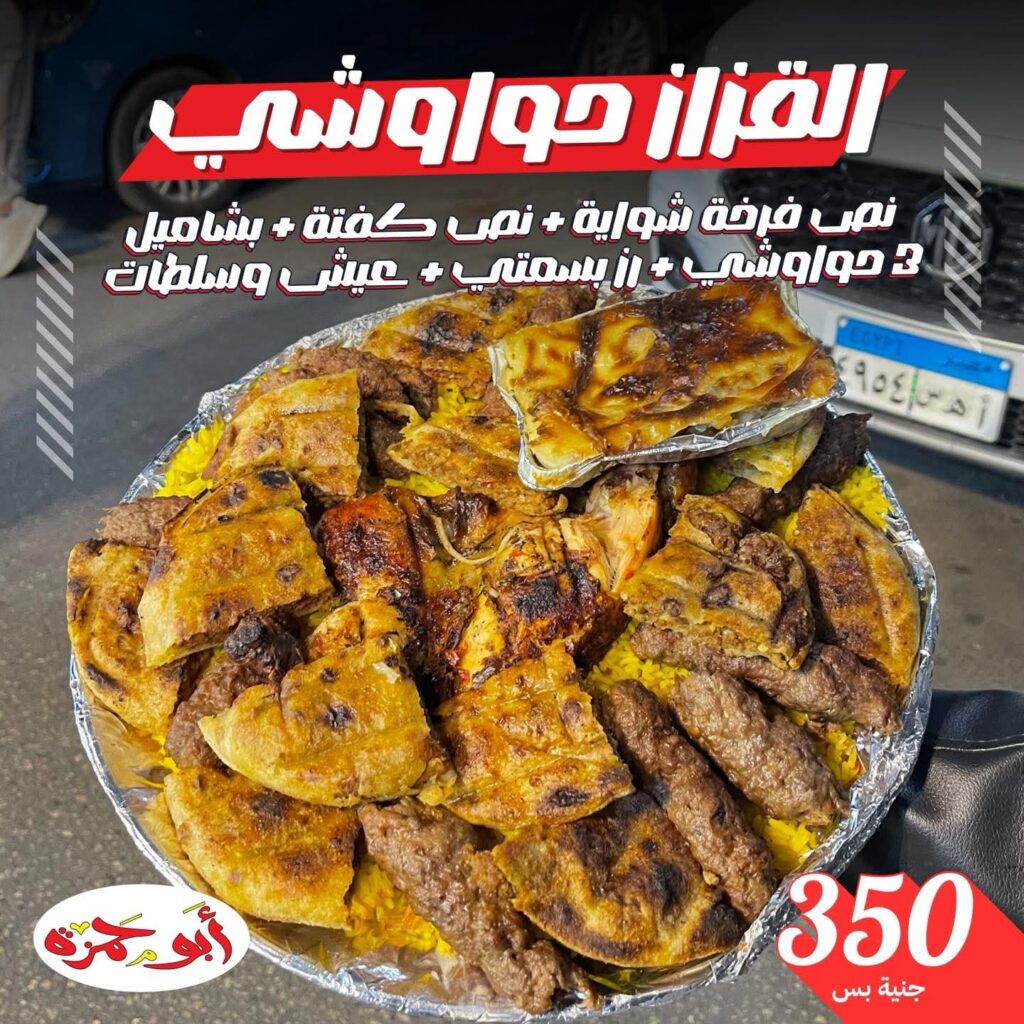
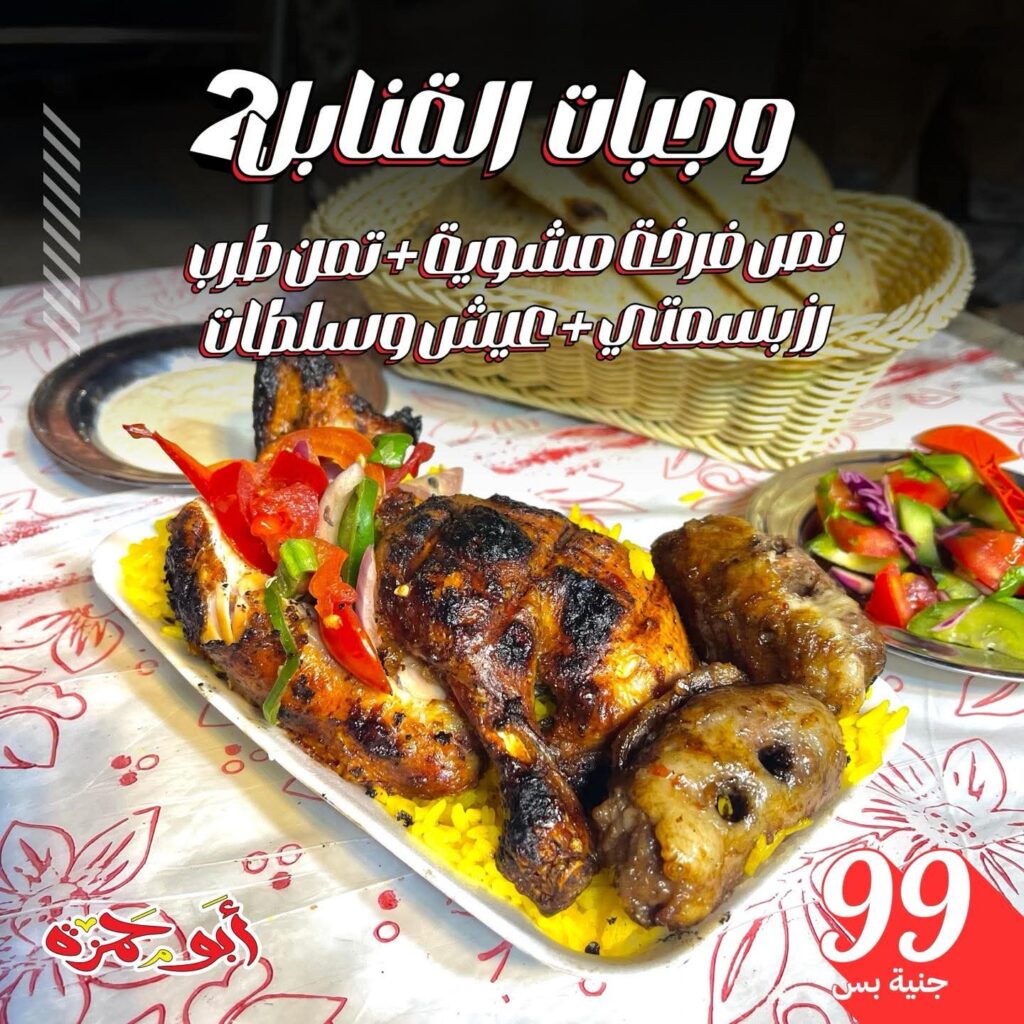
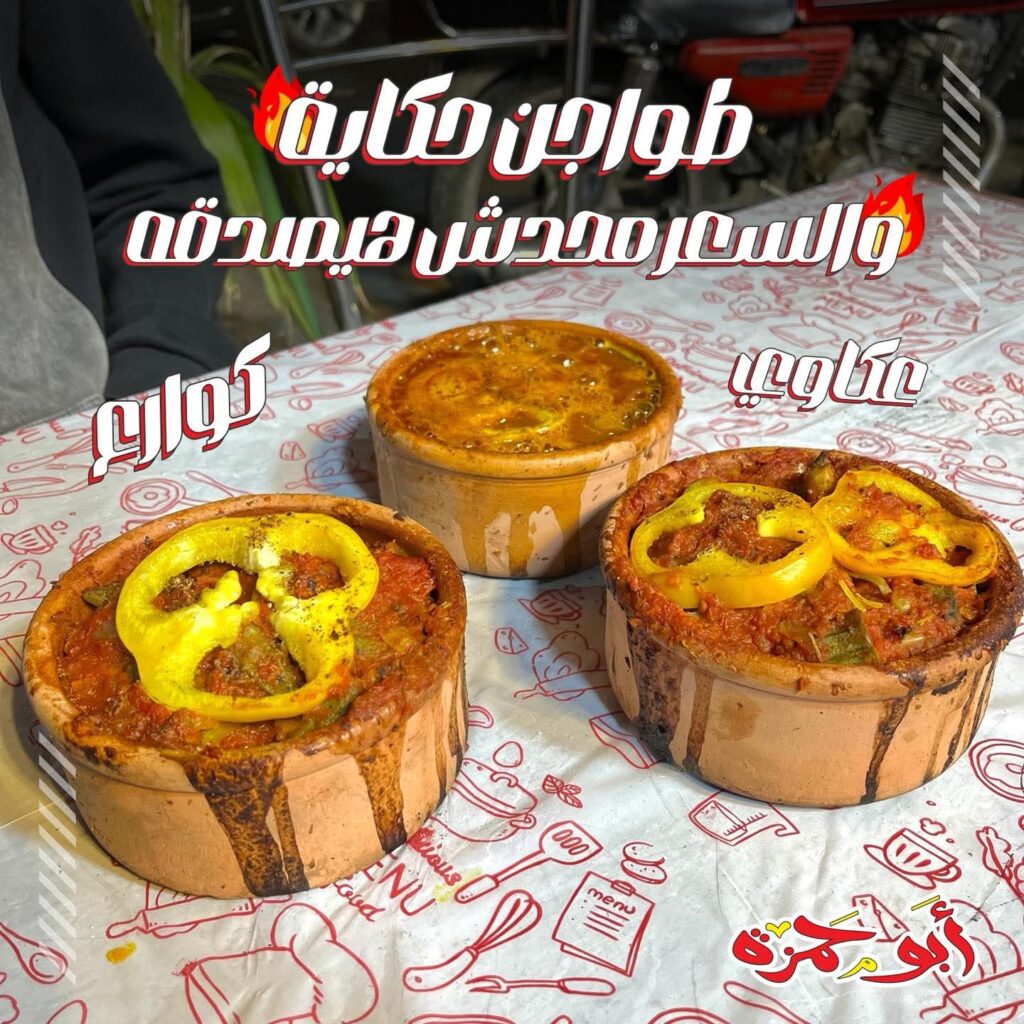
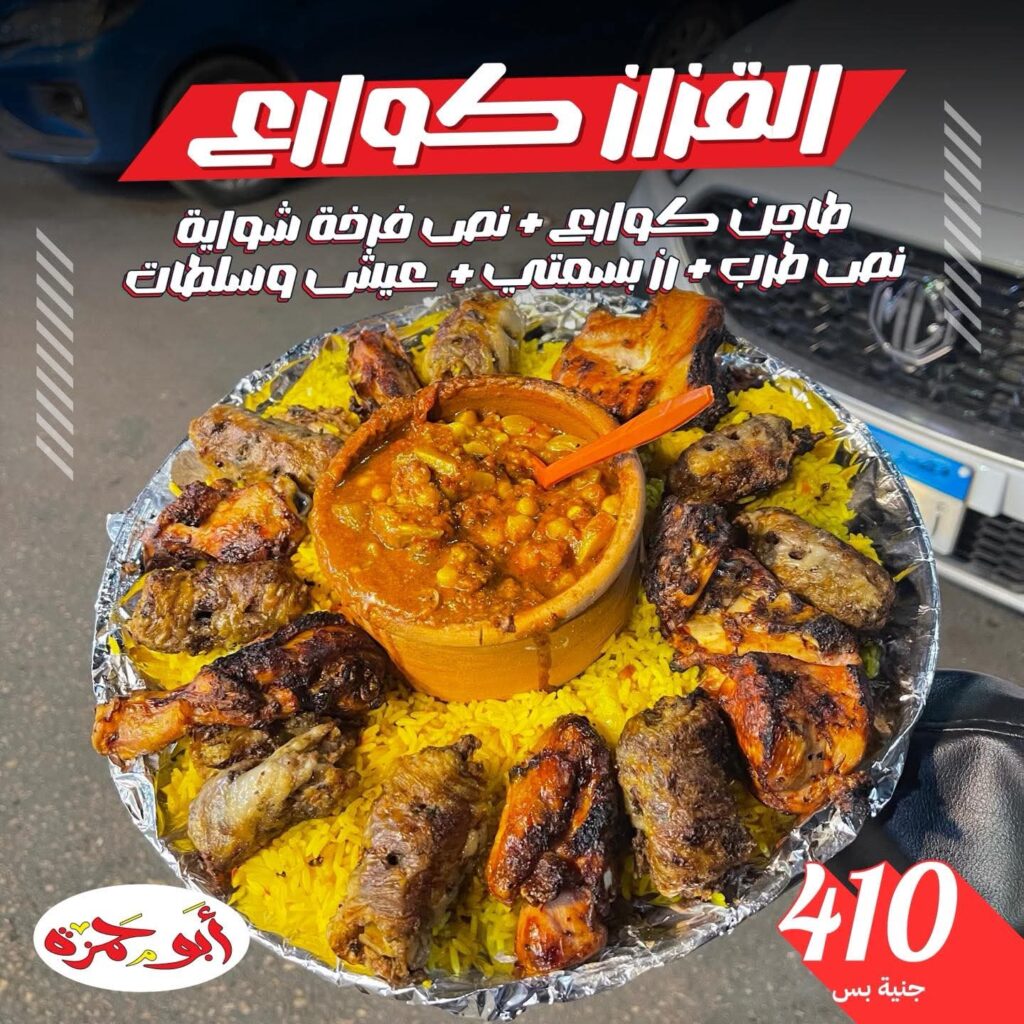
As our branches expanded—from “Al-Rahma” to “Al-Hareef,” and now the three “Abu Hamza” locations—we pledged that the spirit would remain unchanged: the owner is the first to arrive and the last to leave.Personally, I remain on site until 4 a.m., supervising the skewering of meat and order preparations. When customers see the owner standing on his feet, they feel assured that what they are eating was prepared with conscience.
–In Egypt, skilled workers are often described as “irreplaceable yet unpredictable.” How do you manage a large team of craftsmen without being affected by sudden absences or mood shifts?
Management is an art, and managing people is its most difficult form. In the restaurant business, a craftsman might suddenly leave during peak hours.
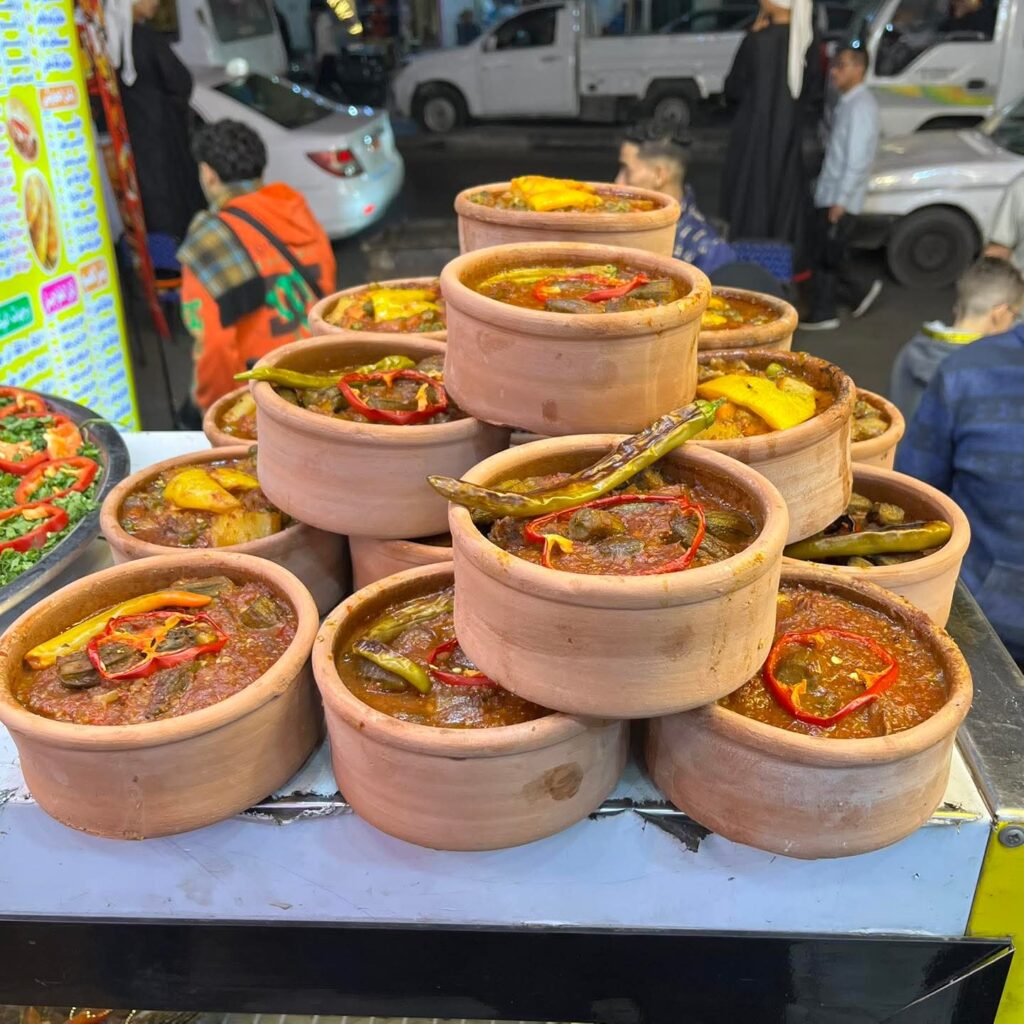
At Abu Hamza, we overcame this with conscious preparedness.I always maintain backup craftsmen—not out of distrust, but to ensure balance. The customer standing at our door bears no responsibility for anyone’s absence.We respect our workers and give them their due and more, but we never allow anyone to compromise the dignity of quality. Just yesterday, I had to let a craftsman go over a minor error in properly cooling casseroles.
Integrity, for us, is non-negotiable.Anyone who works here must be swift as an engine, strong as steel, and most importantly, possess a kind spirit—because we believe the soul of the food begins with the spirit of the one who prepares it.
–Speaking of spirit and quality—what journey does a piece of meat or chicken take from the slaughterhouse to the customer’s table? And what sets you apart from trendy “Syrian-style” food concepts?
What distinguishes us is authenticity. We do not use frozen or pre-cut chicken.
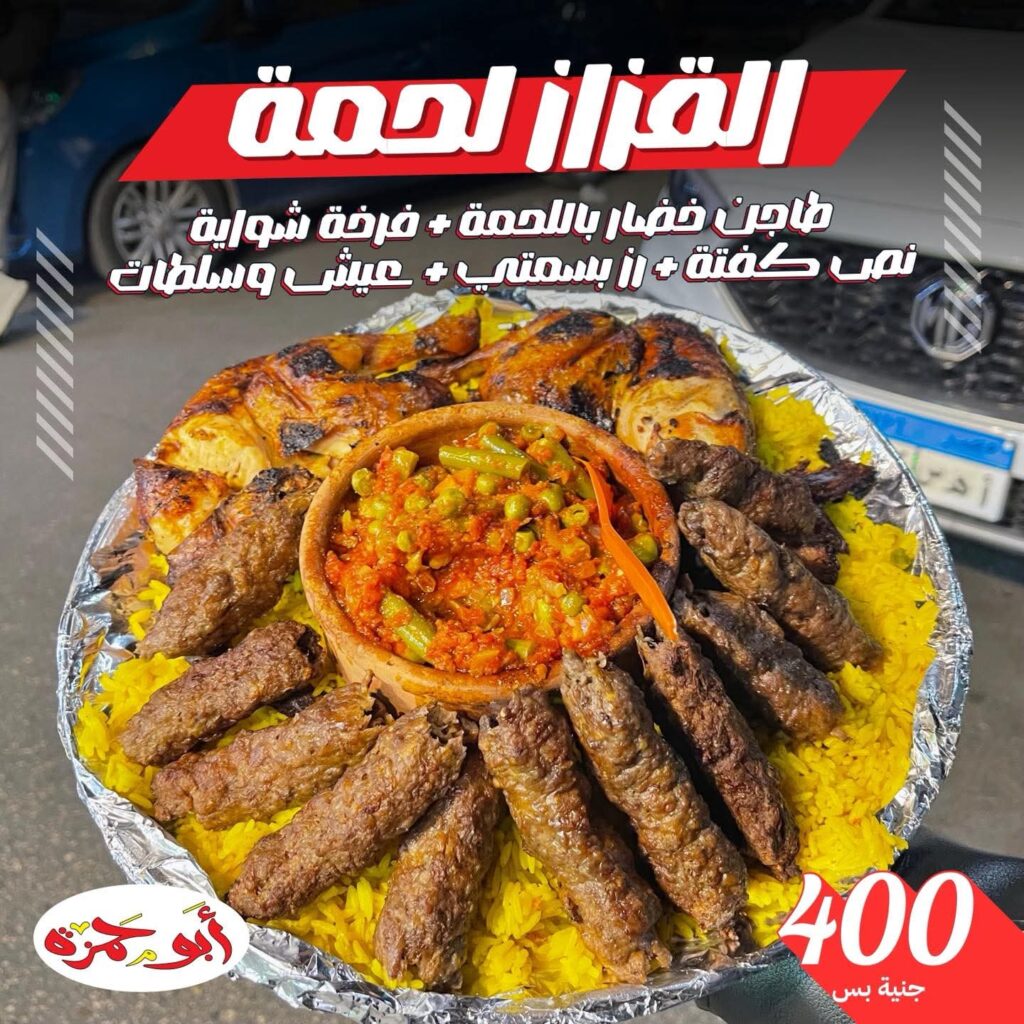
Fresh poultry arrives at 9 a.m., undergoes manual preparation, then marinates for hours in our secret blend.We use salmoura—a mixture of fresh onions and tomatoes—to infuse flavor from within, before finishing it over charcoal for that crisp texture Egyptians love.As for kebab and kofta, we slaughter whole lambs ourselves.
The meat must rest overnight in marinade, just as a traditional homemaker would prepare it, so it becomes tender as silk when chewed.We sell “the taste of the past”—a flavor you can recognize from miles away and immediately know: this is Abu Hamza.
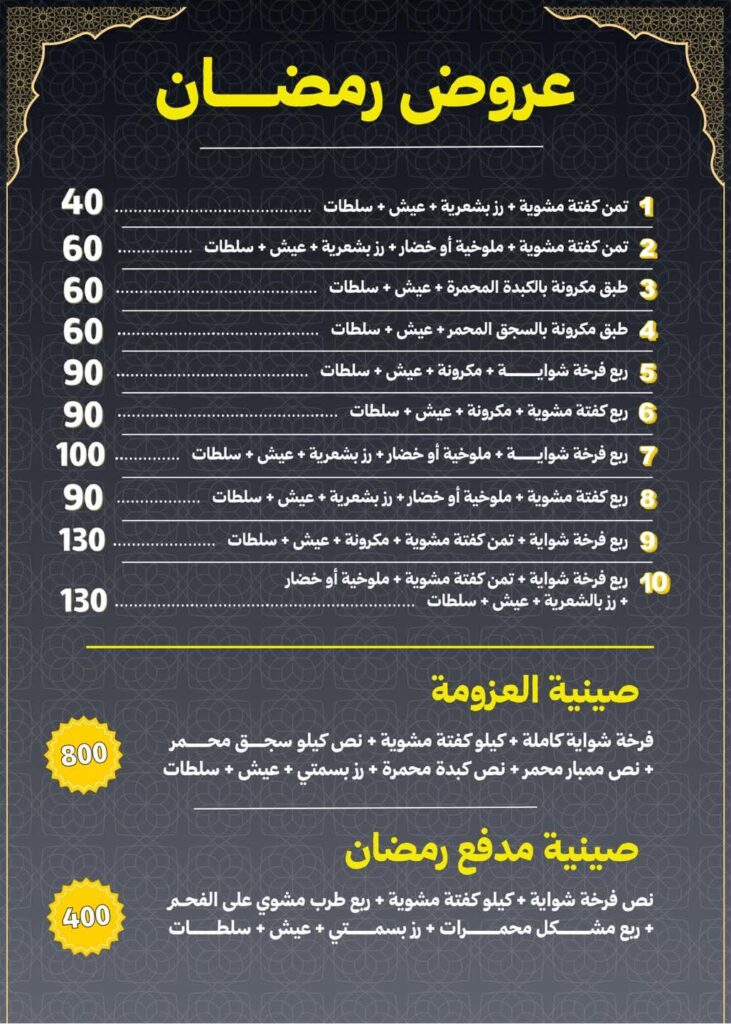
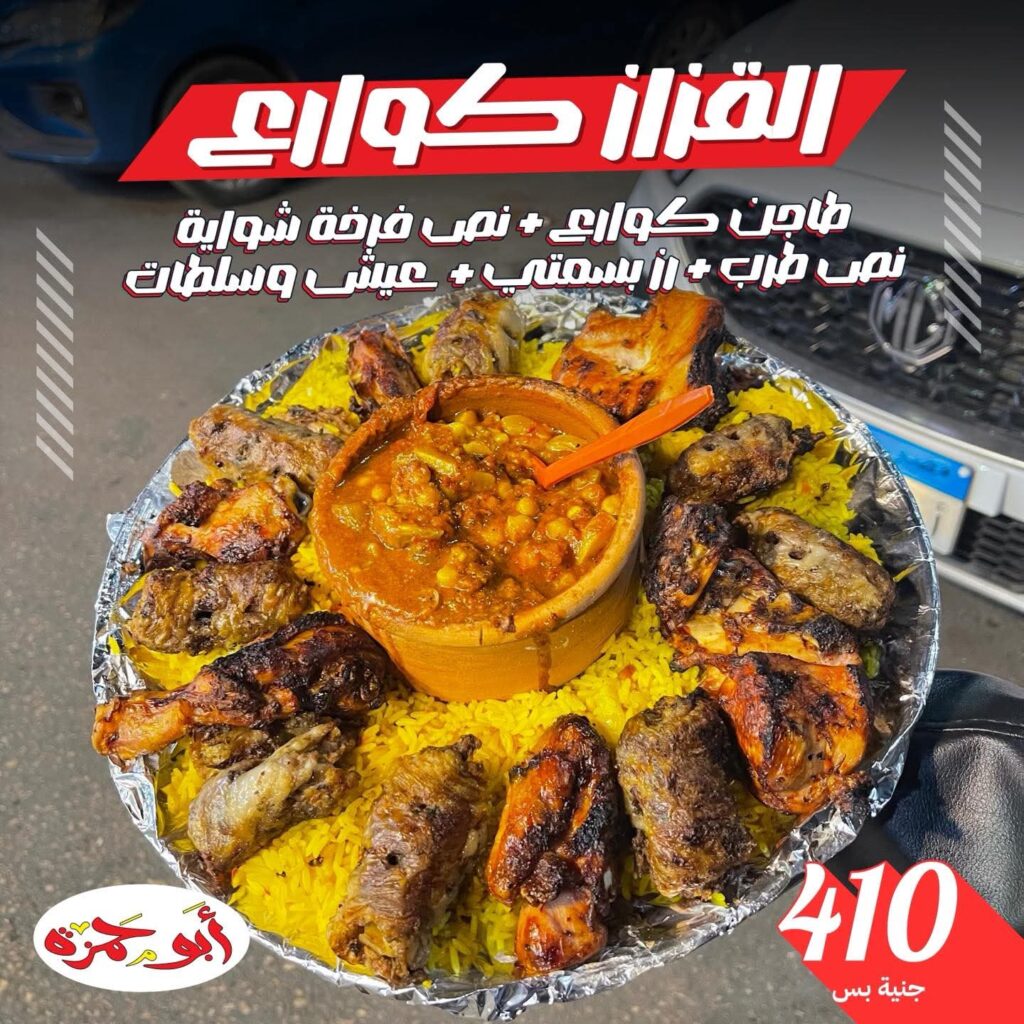
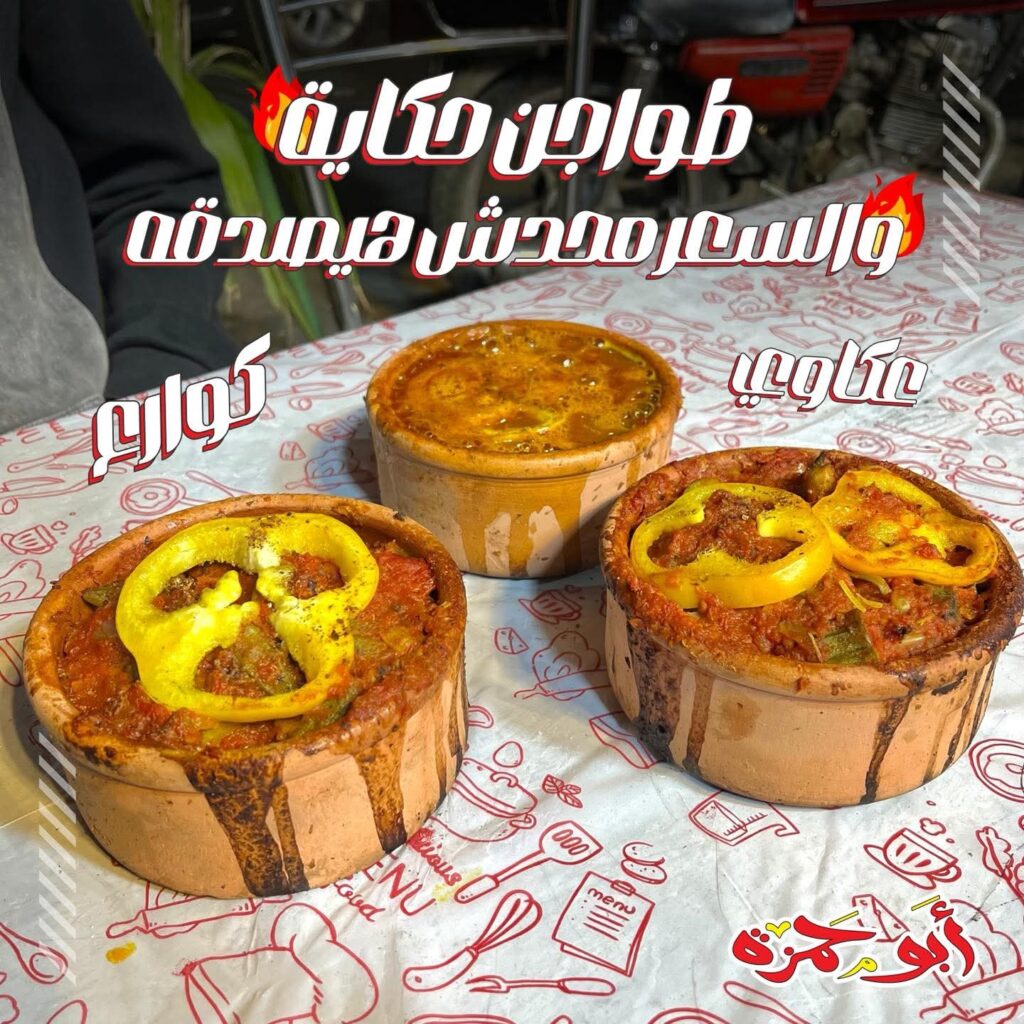
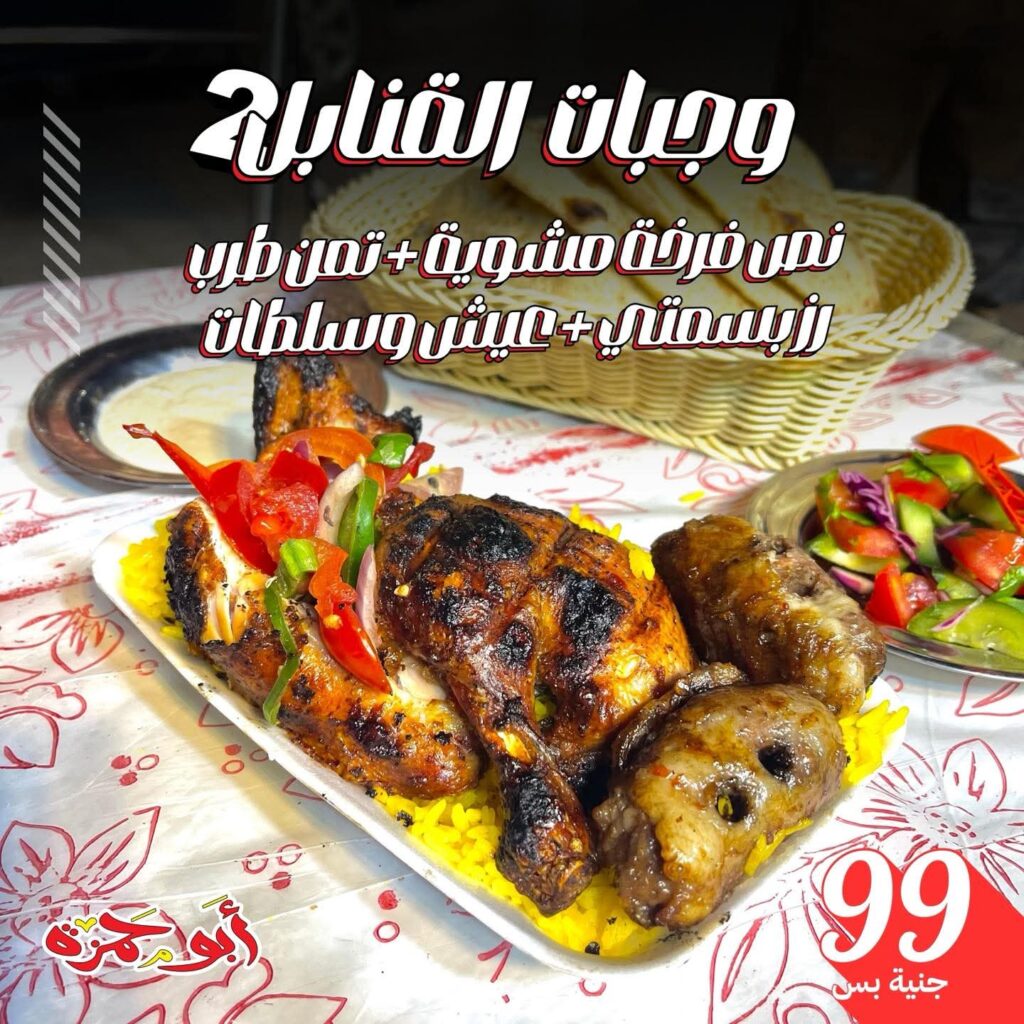
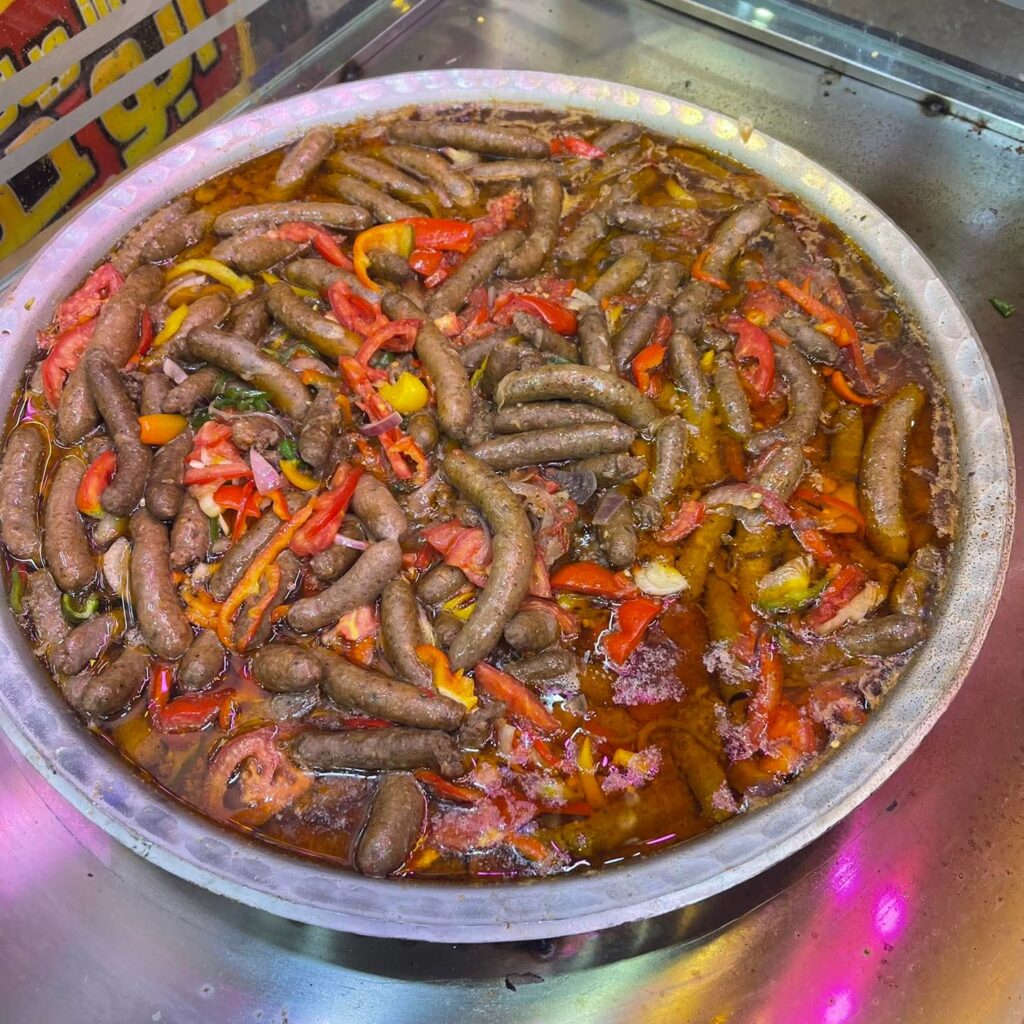
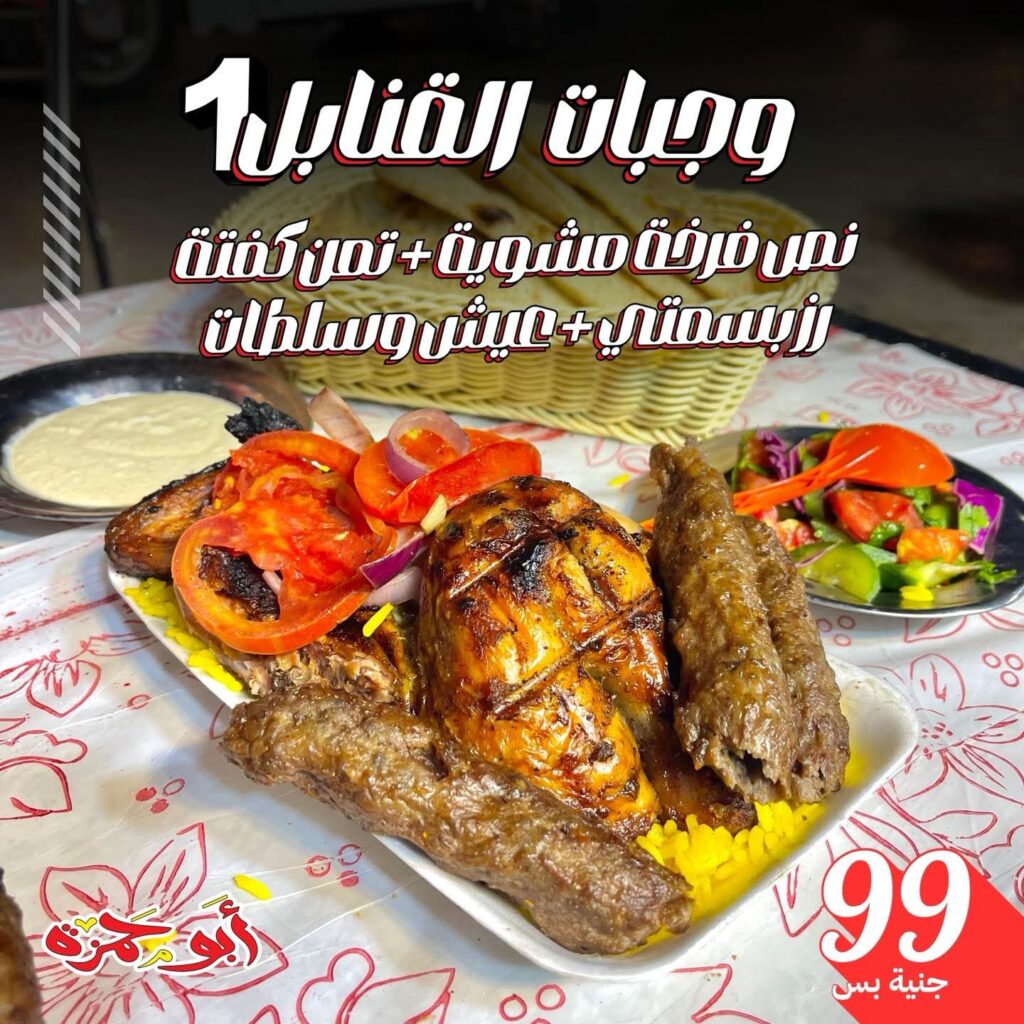
–The question on everyone’s mind: How can a restaurant of this scale offer a mixed kofta sandwich for 40 EGP, and full meals at the same price, amid global inflation?(Smiling confidently) The answer is one word: blessing.
We do not chase quick profits or market greed, where kofta prices have soared dramatically. My margin per kilo may not exceed 30 EGP—barely enough to cover electricity, water, packaging, and daily wages that amount to thousands of pounds.But we rely on volume—and on the prayers of the less fortunate.
When I offer a meal for 40 EGP that includes kofta, rice, bread, and salad, I am feeding the hardworking man who can afford no more.We see ourselves on a social mission, especially during Ramadan. We prepare trays that cost us more than their selling price and consider the difference a form of charity for our health and our children. Trade with God is the only trade that never incurs loss.
-You mentioned continuing work even on the day of your mother-in-law’s passing. How does one balance family grief with the responsibility of “managing the fire” and workers?
Life tests us in many ways. Her passing was sudden. But I had to remain composed, fulfill my duty, and return to work that very day.
I am not only a father to my children—I am also responsible for all these workers. If I stayed home, the lives of hundreds of families connected to this restaurant would halt.Returning from the funeral directly to the restaurant was not hardness of heart—it was the highest form of loyalty to the responsibility God placed upon me.
—You’ve spoken critically about social media influencers. How do you use technology to serve your mission without falling into advertising gimmicks?
Good work does not require loud promotion, but social media today is as essential as salt in food.I refuse anyone who expects free meals in exchange for praise. Our page is a platform for direct communication and for doing good. We organize weekly religious competitions—winners receive a “Tray of Generosity.”
Yesterday, a modest woman won a royal tray; I felt as though I had gifted her a treasure. These competitions build emotional bonds. We do not sell meat alone—we sell appreciation. And when people trust the fairness of our contests, they trust the integrity of our food.
—What is the future dream of “Abu Hamza”? Will you expand into more upscale districts, or remain loyal to working-class neighborhoods?
Our dream is to reach every craftsman and every father seeking a dignified meal at a compassionate price.We are expanding into areas connecting Bab El-Shaaria, El-Zawya, and El-Waili—seeking spaces that offer families comfort and refinement, without abandoning affordable prices.
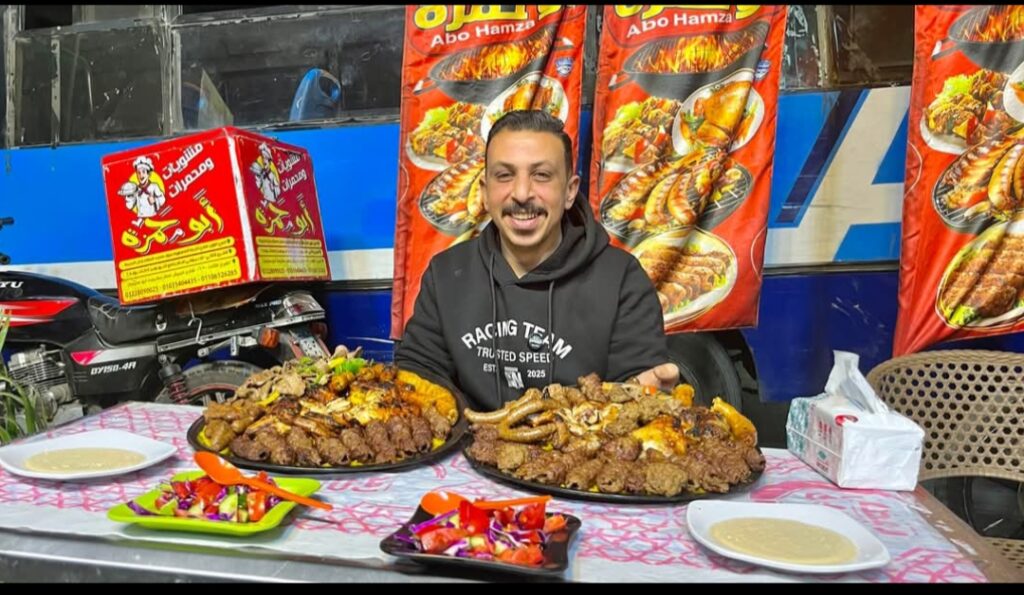
Working-class neighborhoods are our roots, and we will never sever our roots.We will remain “Abu Hamza”—the restaurant known to young and old alike, whose doors are open to every passerby—believing that dignity and contentment are the only currencies whose value never declines.

