



Cairo –Maii Abdo:
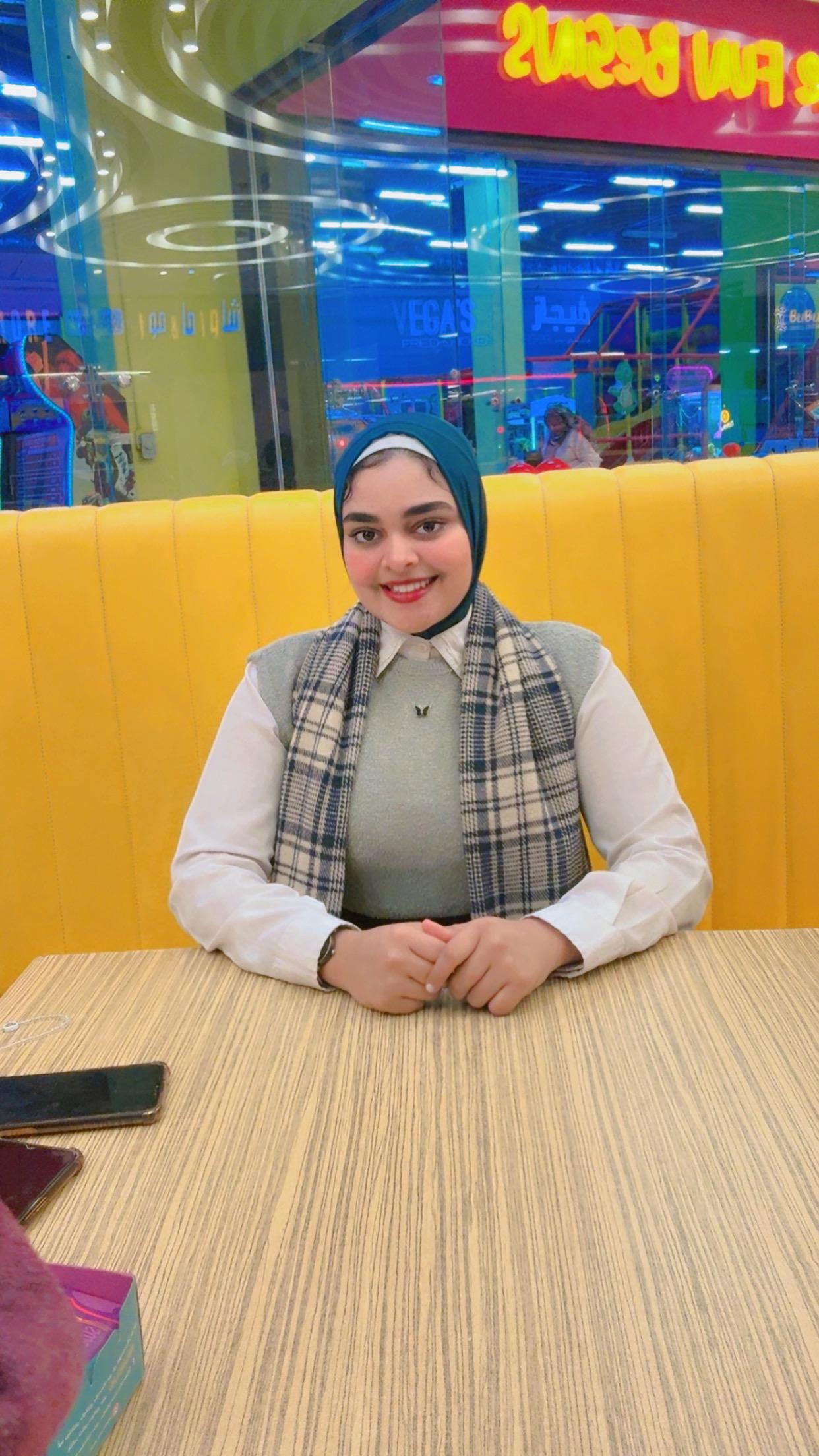
From the outset of her conversation, Sundus Essam El-Din spoke not of a temporary project, but of a conviction rooted in purpose: that shaping a person’s future begins in childhood. A student at the Faculty of Education, Early Childhood Department, at the University of Hurghada, she regards her academic journey not simply as a course of study, but as a moral commitment toward a generation that must first be understood before it can truly be educated.
In her view, a child is not an empty vessel awaiting information, but a sensitive, evolving spirit that flourishes when heard, respected, and nurtured in a secure environment.Her practical engagement with children revealed to her a clear disconnect between conventional teaching methods and children’s emotional and psychological needs.
She encountered students capable of memorizing entire lessons, yet unable to grasp deeper meanings or articulate their own thoughts. That realization marked a turning point. She became convinced that memorization alone does not cultivate awareness, and that learning which fails to reach a child’s heart cannot meaningfully shape the mind.
From this understanding emerged the initiative “Juthoor El Quseir” (Roots of El Quseir), founded on the principle that learning should be experienced, not merely delivered.
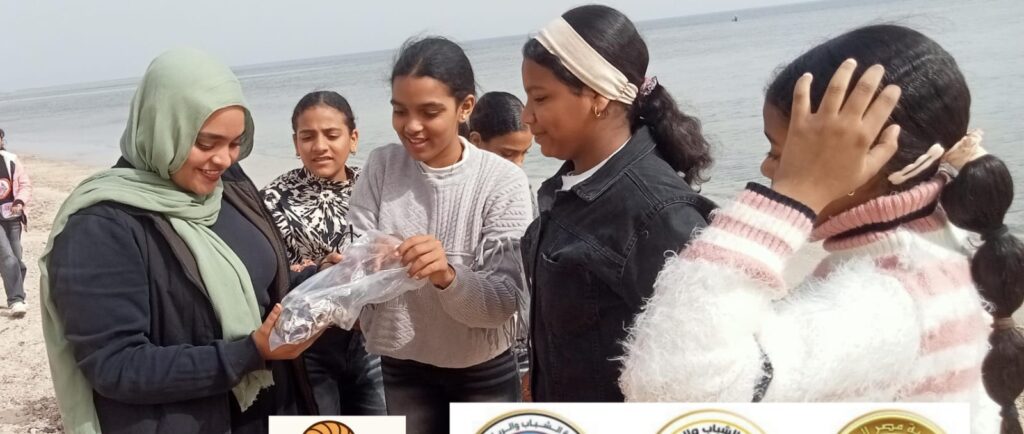
At the heart of the initiative lies a simple yet transformative belief: when children experience knowledge firsthand, it becomes part of their identity. Lessons on heritage are accompanied by visits to historical sites; discussions of moral values are translated into real-life scenarios where children can practice those values.
Interactive activities, movement-based games, role-playing, open discussions, and field visits form the backbone of the program, ensuring that education extends beyond textbooks and classroom walls into lived reality.Yet the initiative’s framework is not purely instructional—it is equally psychological. Sundus underscores that a child who does not feel safe cannot truly absorb knowledge.
“Juthoor El Quseir” therefore prioritizes an atmosphere free from pressure and unhealthy comparison. Mistakes are treated as natural steps in growth, and children are encouraged to explore and experiment without fear of judgment. Each activity is carefully designed with educational intent, but presented with warmth and empathy, so that learning feels organic rather than imposed.The transformations she has witnessed among the children serve as her greatest affirmation.
Reserved children have grown confident enough to speak publicly before their peers. Others who once displayed scattered energy have developed greater focus and balance. Parents, too, have observed noticeable changes in their children’s attitudes, communication styles, and sense of responsibility—evidence that meaningful education leaves visible traces beyond the classroom.
For Sundus, confidence cannot be instilled through instruction alone; it is cultivated through opportunity. When children are trusted with responsibility, invited to share their perspectives, and met with attentive listening, they begin to recognize their own value. Accordingly, the initiative ensures that every child participates meaningfully and that every emerging talent is acknowledged.
Through attentive observation, she identifies children’s individual strengths—leadership tendencies, artistic inclinations, storytelling abilities—and encourages both the children and their families to continue nurturing these gifts beyond the program itself.As the initiative gained momentum and community trust, it became part of the Upper Egypt and Border Cities Youth Development Program, supported by the Ministry of Youth and Sports.
This institutional backing provided formal structure and expanded opportunities, transforming what began as a personal vision into a recognized developmental effort aligned with broader social goals.
The journey, however, was not without obstacles. As a young university student introducing an unconventional approach, Sundus initially faced skepticism and questioning.
Convincing others required perseverance and consistent results. Over time, tangible outcomes replaced doubt with confidence, and “Juthoor El Quseir” steadily secured its place within the community.
Sundus expresses heartfelt gratitude to all who believed in the initiative from its inception, emphasizing that every milestone achieved is the result of collective encouragement and shared faith in the mission.
She extends special appreciation to those who supported her early steps, as well as to the program’s supervisory team—Mr. Shehab, Ms. Naama Raslan, and Ms. Heba—whose guidance and sustained professional and moral support were instrumental in turning aspiration into measurable impact.Looking ahead, Sundus envisions a future that reaches far beyond a single city.
She hopes that one day she will witness former participants of “Juthoor El Quseir” emerge as confident, thoughtful young adults—individuals who take pride in their heritage, express their views with respect, and contribute meaningfully to society. She aspires to see the initiative expand to other communities, becoming a model for community-driven education.
For in her belief, the most enduring investment is neither in infrastructure nor credentials, but in the careful cultivation of the human being from the earliest years of life.

